


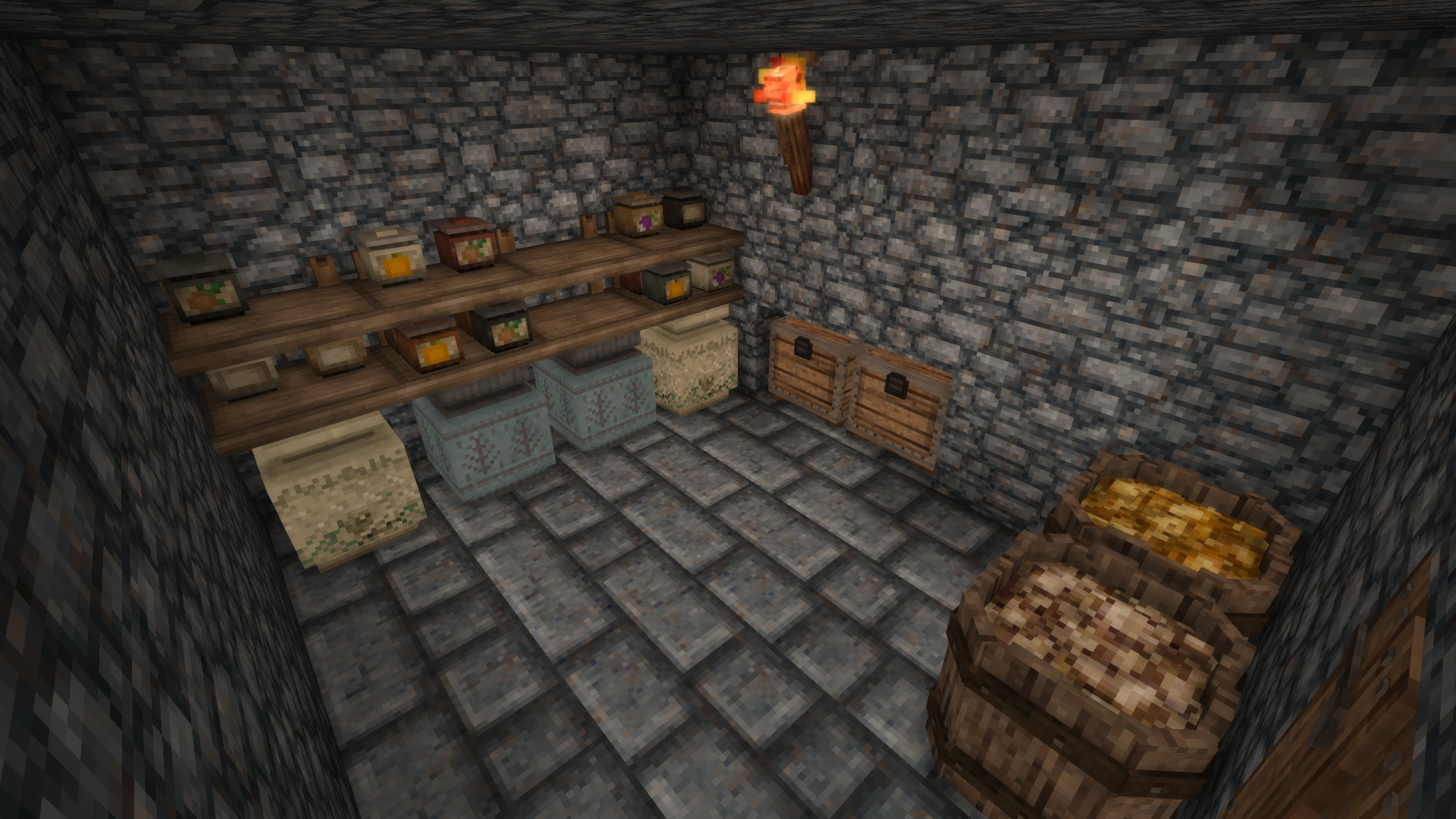
Most food in Vintage Story spoils over time: it first loses nutrition, then turns into rot. You can keep supplies much longer by combining the right containers, processing methods and a cold cellar.
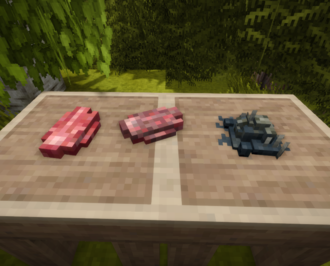
Rot inside a bowl, crock or cooking pot is easy to clean: drop the container into water. After a few seconds the rot floats up and separates from the dish. A sealed crock must be opened first — take one portion with a bowl, then wash it in water.

Shelf life
Every food has its own perish time, made of two parts:
- freshness time — how long the item stays 100% fresh;
- spoilage time — how long it then takes to turn into rot.
The tables use in-game hours: 24 hours is one day, 8760 hours is one year. If you merge two stacks of the same food, both get the average perish time.
Meat
| Item | Freshness, h | Spoilage, h | Rot after spoiling |
|---|---|---|---|
| Raw meats* | 36 | 24 | 1 |
| Cooked meats* | 120 | 36 | 1 |
| Cured meats* | 8760 | 4380 | 1 |
| Termites | 48 | 18 | 0.5 |
| Egg | 120 | 24 | 0.5 |
* Meats means bushmeat, redmeat and poultry.
Fruits
| Item | Freshness, h | Spoilage, h | Rot after spoiling |
|---|---|---|---|
| Cranberry | 96 | 12 | 0.25 |
| Other berries* | 48 | 12 | 0.25 |
| Apple, pear, breadfruit | 960 | 48 | 0.25 |
| Orange, mango, lychee, pomegranate | 360 | 48 | 0.25 |
| Other tree fruit* | 48 | 12 | 0.25 |
| Pineapple | 156 | 48 | 2 |
| Pineapple slices | 48 | 12 | 0.25 |
| Saguaro fruit | 48 | 12 | 0.25 |
* Other berries means blueberry, white currant, red currant and black currant. Other tree fruit means peach and cherry.
Vegetables
| Item | Freshness, h | Spoilage, h | Rot after spoiling |
|---|---|---|---|
| Mushrooms | 432 | 72 | 1 |
| Cooked roots | 48 | 18 | 0.5 |
| Legumes* | 8760 | 876 | 0.33 |
| Onion | 672 | 120 | 0.5 |
| Pumpkin | 672 | 120 | 2 |
| Pumpkin slices | 216 | 72 | 0.55 |
| Raw cassava | 672 | 120 | 0.5 |
| Peeled cassava | 240 | 48 | 1 |
| Bell pepper | 288 | 72 | 0.5 |
| Other vegetables* | 504 | 96 | 0.5 |
| Pickled soybean | 4320 | 432 | 0.5 |
| Other pickled vegetables* | 1800 | 240 | 0.5 |
* Legumes means peanuts and soybeans. Other vegetables means carrot, parsnip, turnip, cabbage and olive. Other pickled vegetables means pickled bell pepper, parsnip, turnip, onion, pumpkin, cabbage and olive.
Grain
| Item | Freshness, h | Spoilage, h | Rot after spoiling |
|---|---|---|---|
| Grain | 2160 | 224 | 0.25 |
| Dried cassava | 2688 | 120 | 0.5 |
| Flour* | 4320 | 336 | 0.25 |
| Dough | 48 | 24 | 1 |
| Bread | 192 | 36 | 1 |
| Part-baked bread | 120 | 24 | 1 |
| Charred bread | 420 | 60 | 1 |
* Flour includes ground dried cassava.
Dairy
| Item | Freshness, h | Spoilage, h | Rot after spoiling |
|---|---|---|---|
| Milk portion | 96 | 96 | 0.002 |
| Cottage cheese portion | 240 | 96 | 0.002 |
| Cheddar cheese | 4320 | 12 | 1 per slice |
| Waxed cheddar cheese | 8640 | 12 | 1 per slice |
| Blue cheese | 5400 | 12 | 1 per slice |
Tip. At the end of the growing season, leave berries on the bush. Ripe bushes keep fruit for 32 to 38.4 days before they reset to empty.
Cooked meals
A meal’s shelf life depends on how fresh the ingredients were. Fresher ingredients last much longer. If you cook with a partly spoiled item, the new meal starts already spoiled.
What affects spoilage
Climate
Hot climates can speed decay up to 2.5× (250%). Very cold climates can slow it to 0.1× (10%). Only sea-level climate counts, so storing food high on a mountain in a hot region does nothing. A cellar completely removes the climate penalty.
Food type
After the freshness window, food loses nutrition and eventually becomes rot. From then on, containers, storage location and climate set the speed. The longest-lasting items in each group are cured meat, pineapple, soybeans/peanuts, flour and waxed cheddar.
Containers
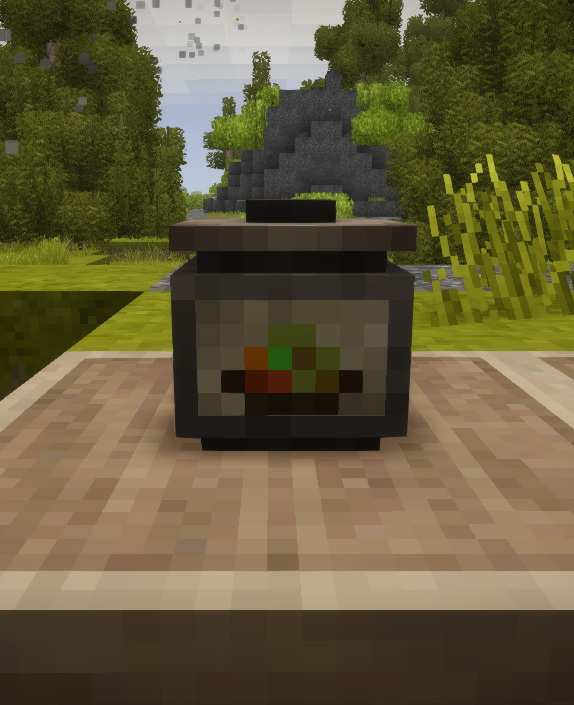
Any stationary container can hold food, but storage vessels are best for grain and vegetables. Vessels and crocks are cheap to make from clay. For meat and vegetables, the best results come from combining processing, the right container and a cellar.
Crocks
A crock holds up to 4 portions of meals or pickled vegetables. On its own it only slightly slows decay, so it is good for short-term storage. For the long term, seal it with a lump of fat or beeswax in the crafting grid: decay drops by a factor of 10. Filled crocks can sit in your inventory, and a shelf holds up to 8 of them.
Storage vessels
Any food can go in a vessel — raw or already preserved. Vegetable decay is reduced by 75%, grain decay by 50%. That makes vessels a strong choice for both short and long storage.
Preservation processes
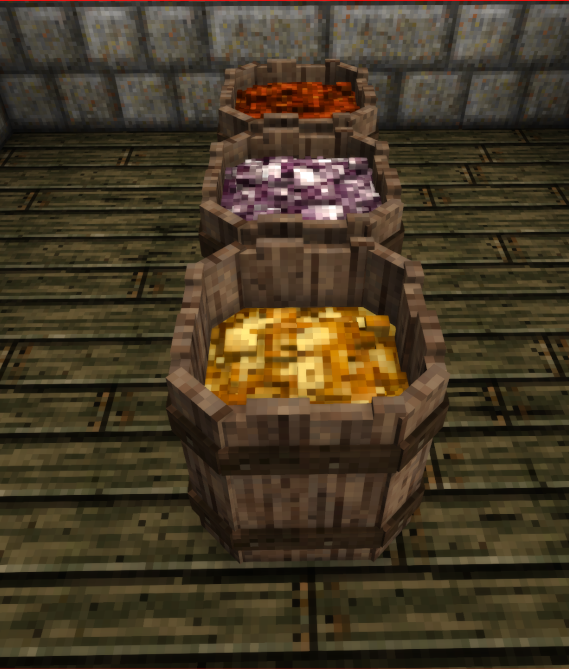
Almost everything can be stored as cooked meals, but that is not always practical. The processes below extend shelf life a lot. Each extra alcohol step usually means fewer satiety and nutrition points.
Jam
You need a cooking pot, a bucket, honey and any fruit. Heat at least two berries and 1.2 L of honey. For the longest shelf life, keep jam in a sealed crock.
Juicing
You need a fruit press, a bucket and at least 16 pieces of fruit.
Fermenting
Fruit, grain and honey can be fermented into alcohol, then distilled into spirits and aqua vitae. Fermenting needs a barrel, a bucket, water and raw ingredients:
- cider — apples or most warm-climate fruit;
- wine — berries, cactus fruit or pomegranate;
- ale — grain;
- mead — honey.
Distilling
You need a boiler, a condenser, firewood and base alcohol:
- brandy — from cider or wine;
- vodka — from cassava or breadfruit ale;
- whiskey — from spelt, rice, rye or amaranth ale;
- distilled mead — from mead.
Aqua vitae can be made from any distilled alcohol.
Salt curing
You need a barrel, salt and raw meat. Each unit of meat takes two units of salt, so 32 meat = 64 salt. After you add the ingredients, the barrel GUI shows the yield. Seal it for 480 hours (20 days).
Pickling
You need a barrel, a bucket, salt, water and vegetables. Mix water and salt in the barrel to make brine, then add the vegetables. Each vegetable or legume uses one unit of brine, and the barrel must stay sealed for 336 hours (14 days). Cured meat and pickled food can sit in any stationary container, but storage vessels are best.
Cheese
Milk becomes cheese in several barrel steps using pickled vegetables and salt.
Cellars
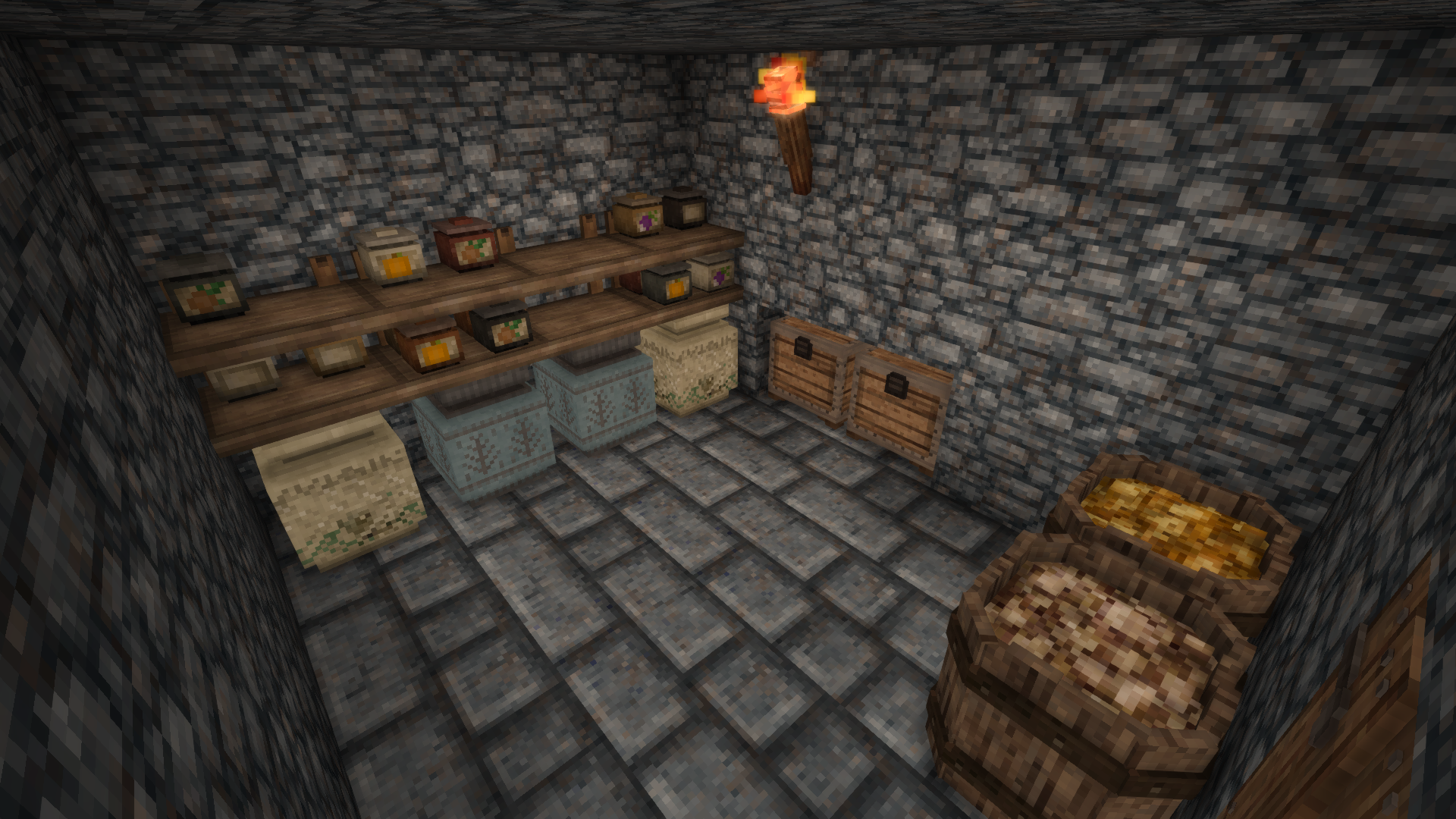
A cellar removes the effect of a warm climate. It stays at 5°C, or colder if the outside air is already colder. You only gain from a cellar if the outdoor temperature is above 8°C.
How to build one
- Build walls from soil, ceramic or stone. Use as few doors and trapdoors as possible — ideally none. Fill the opening with dirt or hay. A door does not count as a soil or stone block, so it lowers efficiency even if it blocks sunlight.
- Keep sunlight low. It can raise the temperature by up to 10°C and speed spoilage. Lanterns, torches and oil lamps are fine. Going underground helps keep the sun out, but being underground is not a bonus by itself. A cellar can sit above ground as long as the sun cannot reach it.
- Keep the interior no larger than 7×7×7. A bigger room will not be recognized as a cellar. Only the direct walls count; corner blocks can be left out.
- Put food on shelves or in containers. A typical layout is crocks on shelves, vessels, chests and pickle barrels. Everything in the cellar gets the same decay reduction.
- Chiselled blocks are risky in cellars, even if a full face points inward. The game can misread them and let light in. Use no chiselling, or cover it with a complete extra layer of solid blocks.
Tip. Check the block info HUD on a shelf or container. A line like “Stored food perish speed: 0.25” means food lasts 4 times longer.