


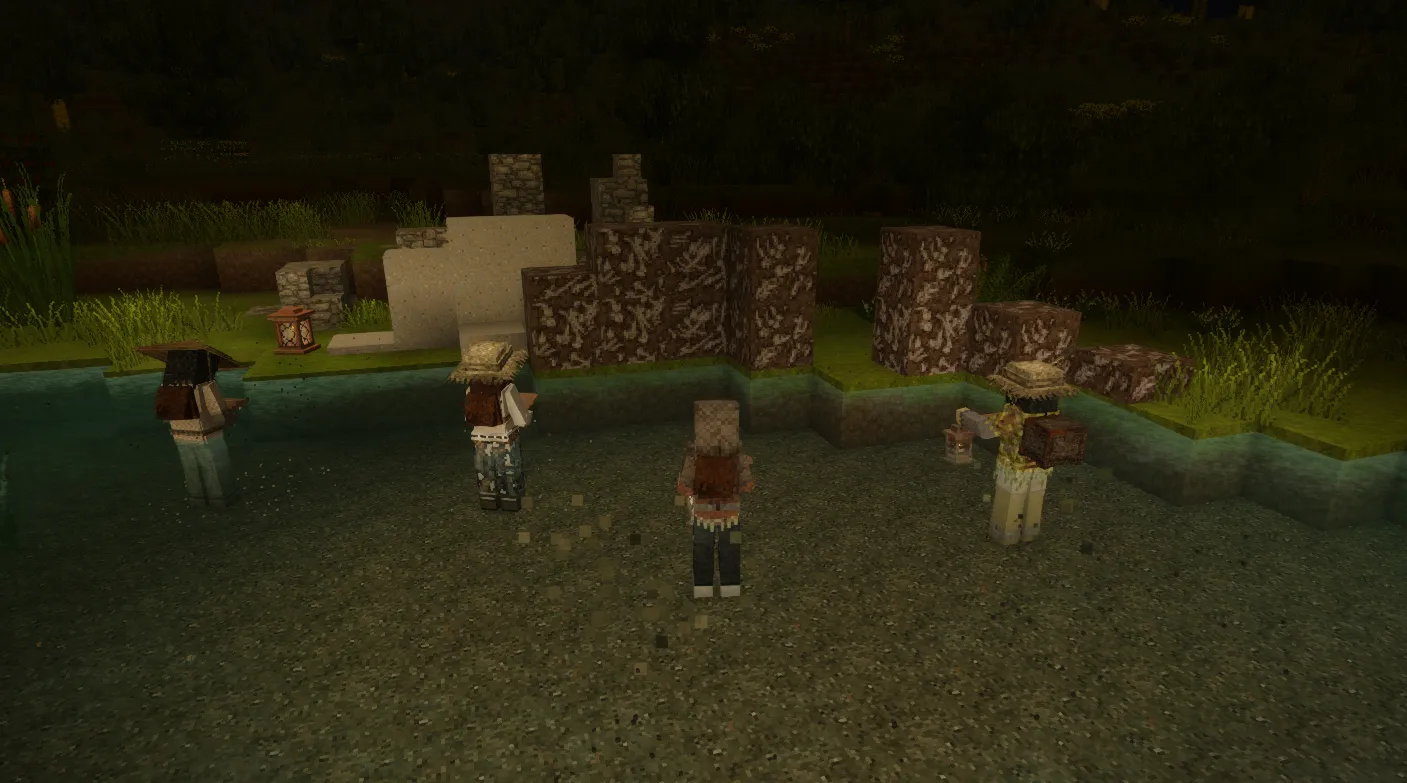
Panning helps when there are not enough copper nuggets on the surface. It is slow, and all it needs is a wooden pan, water, and sand or gravel. Bony soil can also be panned, though it holds a completely different set of finds.
Making a wooden pan
Place a log and a knife side by side in the crafting grid. The knife counts as a tool and is not consumed when the pan is made. The picture below show an oak log and a flint knife. Another wood works too, and so does any other knife.
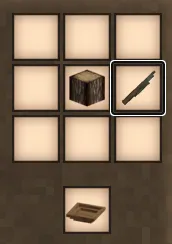
A whole ebony log and a whole purpleheart log are not accepted. Those woods need a quarter log.
What can be panned
Regular sand, gravel, and bony soil can be panned. The rock type of the sand or gravel only changes the ordinary loose stone among the results. Every other drop is the same for both materials.
Bony soil occurs around and below ruins. It has its own finds: bones, flax fibers, arrowheads, candles, gemstones, and lore books. It does not yield ordinary copper nuggets.
Note: muddy gravel and sludgy gravel cannot be panned. If the pan will not fill, check the exact name of the block.
How to pan
- Place sand, gravel, or bony soil close to water.
- Hold the wooden pan and right-click the block to fill it.
- Stand in water and release the button.
- Hold right-click again. You do not have to aim at the water.
- Wait for the animation to finish and repeat.
One block fills the pan eight times and takes about 40 seconds to process completely. Release right-click briefly after filling the pan: keeping it held down does not start the next wash automatically.
Note: you must remain still and stand in water throughout the process. Any movement cancels the action.
One wash uses 5 hunger points, adjusted by the world's hunger rate setting. A full stack takes around 45 minutes. If the inventory is full, recovered items fall at your feet.
How much copper to expect
A native copper nugget has a base chance of 15% per wash of sand or gravel. A block provides eight washes, giving an average of 1.2 nuggets per block. The result is random: one block may contain no copper, while another may provide several nuggets.
A copper hammer and pickaxe require 40 nuggets together. On average, that takes around 34 blocks of sand or gravel and about 22 minutes of work. This is not guaranteed, so bring more material than the average.
Sand and gravel drops
Only one item can be awarded per wash. The game shuffles the drop list and stops after the first successful roll, so the table shows base values rather than guaranteed results.
| Find | Base chance per wash |
|---|---|
| FindLoose stone of the local rock | Base chance per wash20% |
| FindNative copper nugget | Base chance per wash15% |
| FindFlint | Base chance per wash11% |
| FindBlue clay | Base chance per wash3% |
| FindQuartz chunk | Base chance per wash3% |
| FindClear quartz | Base chance per wash2.5% |
| FindSphalerite nugget | Base chance per wash2% |
| FindFlint arrowhead | Base chance per wash2% |
| FindCopper arrowhead | Base chance per wash1% |
| FindFlint spearhead | Base chance per wash1% |
| FindRusty gear | Base chance per wash0.6% |
| FindCopper spearhead | Base chance per wash0.4% |
| FindNative gold nugget | Base chance per wash0.4% |
| FindRough lapis lazuli | Base chance per wash0.2% |
| FindMetal parts | Base chance per wash0.2% |
| FindMetal scraps | Base chance per wash0.2% |
| FindBony ribcage | Base chance per wash0.1% |
| FindBronze armlet | Base chance per wash0.08% |
| FindTemporal gear | Base chance per wash0.05% |
| FindCassiterite nugget | Base chance per wash0.02% |
| FindEach of the two tuning cylinders | Base chance per wash0.02% |
Even rarer finds include a golden necklace, bronze gem necklace, silver chain, silver diadem, and gold coronet. Each has a base chance of 0.01%.
Panning works for the first copper tools, but not as a practical source of tin. Cassiterite is far too rare here to plan the move into the Bronze Age around it.
Bony soil drops
It is worth carrying all the bony soil home from a ruin. It provides no ordinary copper nuggets, and it is much better for rare objects, lore books, and early candles for a lantern.
| Find | Base chance per wash |
|---|---|
| FindBone | Base chance per wash30% |
| FindFlax fibers | Base chance per wash15% |
| FindFlint arrowhead | Base chance per wash10% |
| FindCopper arrowhead | Base chance per wash5% |
| FindRusty gear | Base chance per wash2.5% |
| FindBony ribcage | Base chance per wash2% |
| FindCandle | Base chance per wash1.5% |
| FindRough emerald | Base chance per wash1% |
| FindRough peridot | Base chance per wash1% |
| FindNative gold nugget | Base chance per wash1% |
| FindNative silver nugget | Base chance per wash1% |
| FindCopper spearhead | Base chance per wash1% |
| FindRough diamond | Base chance per wash0.7% |
| FindEach of four lore books | Base chance per wash0.35% |
| FindCopper lamellae | Base chance per wash0.2% |
| FindCopper chain armor sheet | Base chance per wash0.2% |
| FindBronze armlet | Base chance per wash0.16% |
| FindTemporal gear | Base chance per wash0.1% |
| FindEach of the two tuning cylinders | Base chance per wash0.06% |
Each decorative piece from bony soil has a base chance of 0.04%. The Pilferer trait raises the rusty gear chance by 10% when panning any material.
Which material is worth panning
Use sand or gravel for the first hammer and pickaxe; there is no difference between them. Keep bony soil for candles, lore books, rusty gears, gemstones, and rare objects. Panning it for ordinary copper is pointless.
This guide uses information from the official wiki page Panning.