


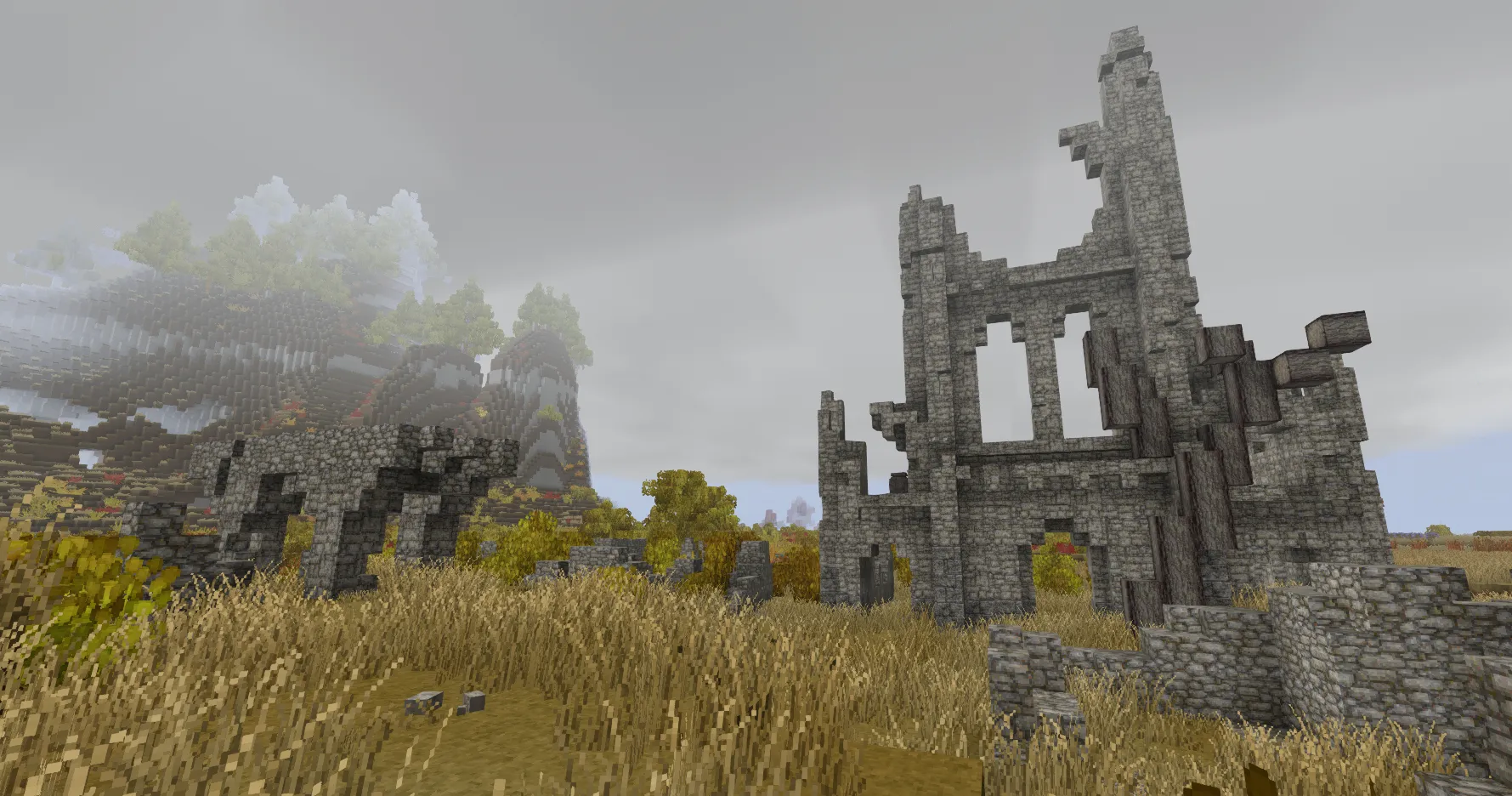
A broken bit of wall sticks up in the field. The house has fallen in, and the pots are still there. They hold seeds, grain, coal, and sometimes a flint tool.
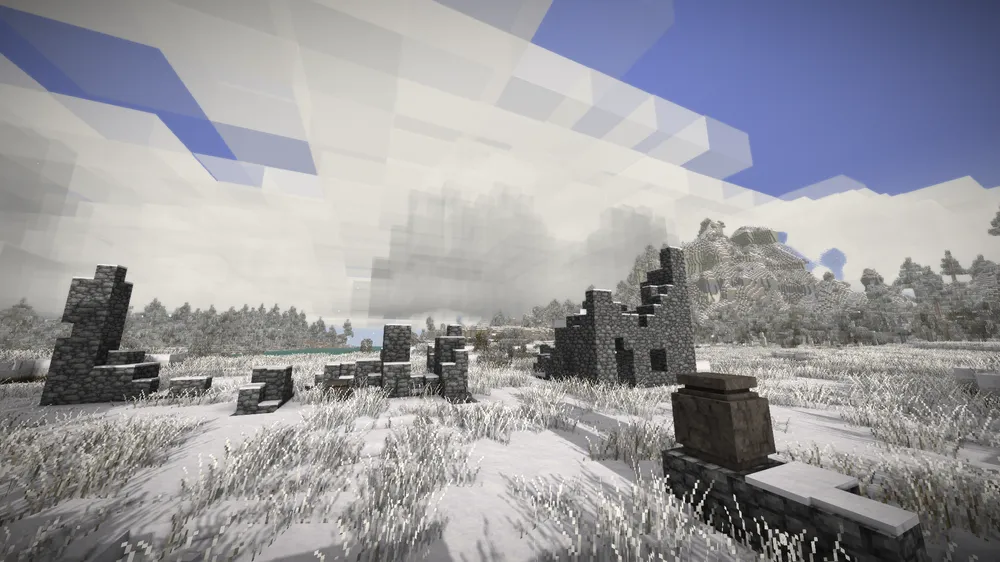
What stands on the surface
Most of the time it is a small house or a scrap of foundation: cobblestone, aged oak planks, empty torch holders, a chest, rusty gears, a skeleton, a toy, clutter. These scraps show up along the road. Ancient and special buildings are rarer. Special ruins in that group stand ten thousand blocks apart.
The floor of these houses often sits in the ground. There is often another level under it, and in the rare buildings the basement goes deep.
Underground, ruins sit in caves and shafts. Small ones show up more often than medium and large ones. You will find aged oak planks, furniture, paintings, cracked vessels, and whole ceramic storage vessels. A whole storage vessel can be taken home. A cracked vessel breaks when you hit it and gives up what is inside.
The Resonance Archives and the Lazaret are separate, large places. They are easy to tell apart from these scattered houses.
Bony soil shows up in the walls and floors. Pan it: a bone is the usual find.
Cracked vessels
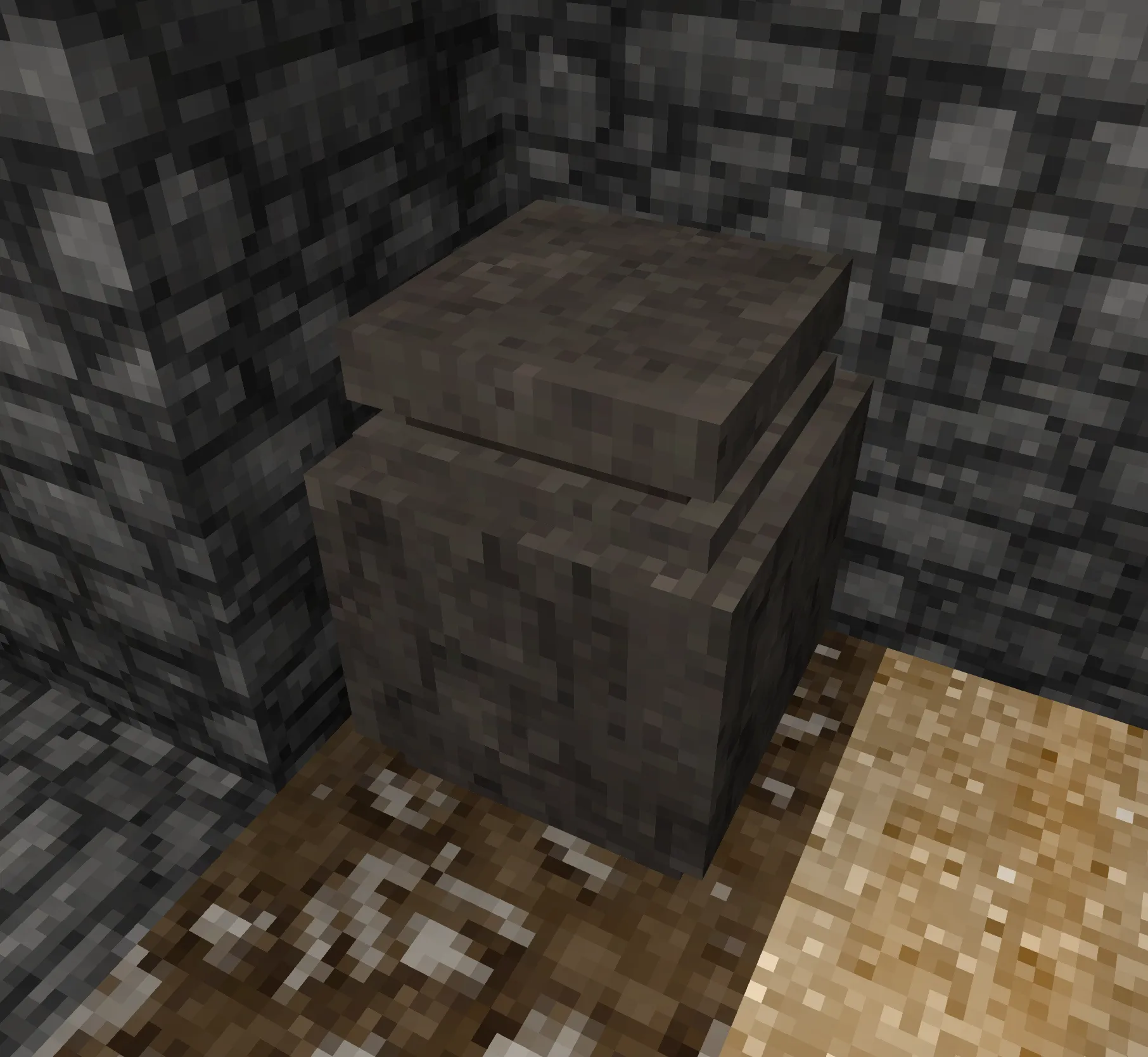
The words in parentheses are part of the name. They say which vessel it is: Seed, Food, Forage, Ore, Tool, Farming, or Arctic supplies. The vessel breaks by hand. A pickaxe, axe, shovel, hoe, hammer, sword, or spear does it faster.
When one line lists several items, the vessel picks one of them. The stone is a single kind, and so is the clay: either blue clay or fire clay.
| Vessel | Stacks | Usually inside |
|---|---|---|
| VesselCracked vessel (Seed) | Stacks1 | Usually insideone kind of seed, 5–7 |
| VesselCracked vessel (Food) | Stacks1 | Usually insideone grain, 8–15 |
| VesselCracked vessel (Forage) | Stacks2 | Usually insideflint, sticks, dry grass, stone, clay, cattails |
| VesselCracked vessel (Ore) | Stacks1 | Usually insidecoal or a nugget |
| VesselCracked vessel (Tool) | Stacks2 | Usually insidea flint tool |
| VesselCracked vessel (Farming) | Stacks2 | Usually insidefeathers, flax, cabbage seeds, cattails |
| VesselCracked vessel (Arctic supplies) | Stacks2 | Usually insidecattails and dry grass |
The seeds are carrot, onion, spelt, turnip, rice, rye, soybean, pumpkin, or cabbage. Always one kind.
Farming in Vintage Story: farmland, moisture, and fertilizer
A food vessel holds spelt grain, rice grain, flax grain, or rye grain. Now and then a tuning cylinder comes out instead of the grain.
Forage gives two stacks. Besides the usual flint, sticks, dry grass, stone, clay, and cattails, a horsetail poultice from linen, flax fibers, honeycomb, a bundle of bamboo stakes, or a filled beenade shows up less often.
Ore is one stack. Brown coal, black coal, a native copper nugget, a piece of quartz, or galena are the common ones. Tin, zinc, and bismuth are less common, and gold and the other nuggets are rare.
Tools are two stacks. A flint axe, flint shovel, or flint knife is the usual result. A copper tool is less common, and tin bronze is less common still. A separate stack can be 2–4 rusty gears.
A farming vessel also gives two stacks: feathers, flax fibers, cabbage seeds, cattails. Sometimes a hand basket of reed and flax twine. A linen sack or a scythe, copper or tin bronze, is rare.
Cracked vessel (Arctic supplies) stands in buildings of a cold climate, colder than −14 °C. Cattails and dry grass are the usual finds, along with flint, sticks, stone, medium fertility soil, and clay. A poultice, flax, honeycomb, and rusty gears are less common.
The Malefactor trait Pilferer gives a 12% chance to take the vessel intact. That break keeps the contents inside: you can carry the vessel and break it later. When the contents do spill, the same trait gives +15% to the amount. The Blackguard trait Heavyhanded cuts the loot by 10%.
The treasure hunter trader sells six cracked vessels: Seed, Food, Forage, Ore, Tool, and Farming. Seeds usually go for about 8 rusty gears, the others for about 6. The commodities trader pays about 11 for seeds and about 9 for the rest. The price moves around those numbers, so open both windows.
The wiki pages Ruin and Cracked vessel describe the same ruins and vessels.