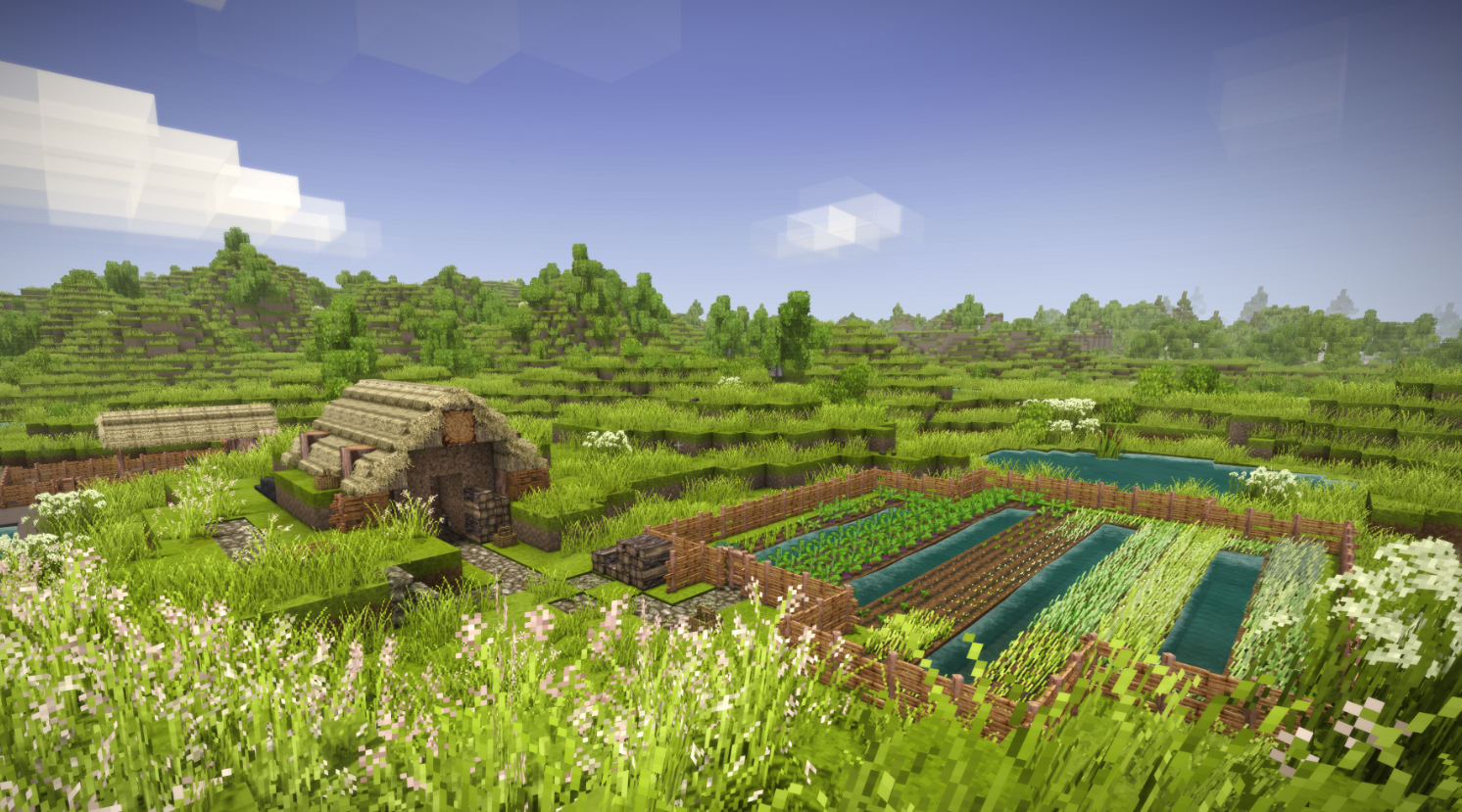
Farming in Vintage Story starts with soil and seeds. A hoe turns soil into farmland, fresh water has to sit nearby, and each plant spends one nutrient while it grows: N, P, or K. Grain feeds both the player and the animals at the trough. Fruit trees and timber saplings are a separate mechanic and are not part of this guide.
Soil
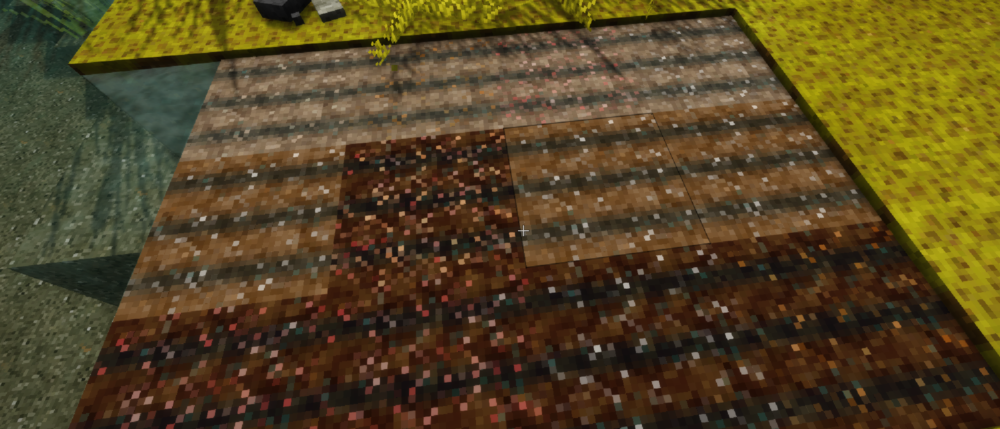
Fertility stays on the block if you dig it up and carry it home. High fertility soil is easiest to spot from the side: it is darker than medium fertility soil. The client has five steps.
| Block | Nutrient ceiling |
|---|---|
| Barren soil | 5% |
| Low fertility soil | 25% |
| Medium fertility soil | 50% |
| High fertility soil | 65% |
| Terra preta | 80% |
The first four generate in the world. Terra preta is crafted only. Empty farmland restores nutrients only up to its own ceiling: medium soil will not climb to 65% on its own.
Farmland and moisture
Using a hoe on soil creates dry farmland. The block cannot be picked up again. Breaking it destroys it. In game the names read “Dry Farmland (Medium Fertility)”, “Moist Farmland (Terra preta)”, and the same pattern for the other steps.
A fresh water source moistens farmland horizontally, diagonals included, out to three blocks. The block touching the water gets 75% moisture, two blocks away gets 50%, and three blocks away gets 25%. Water directly underneath does nothing. Salt water does not water the crop and kills it: the block says “Crop damaged by nearby saltwater”.
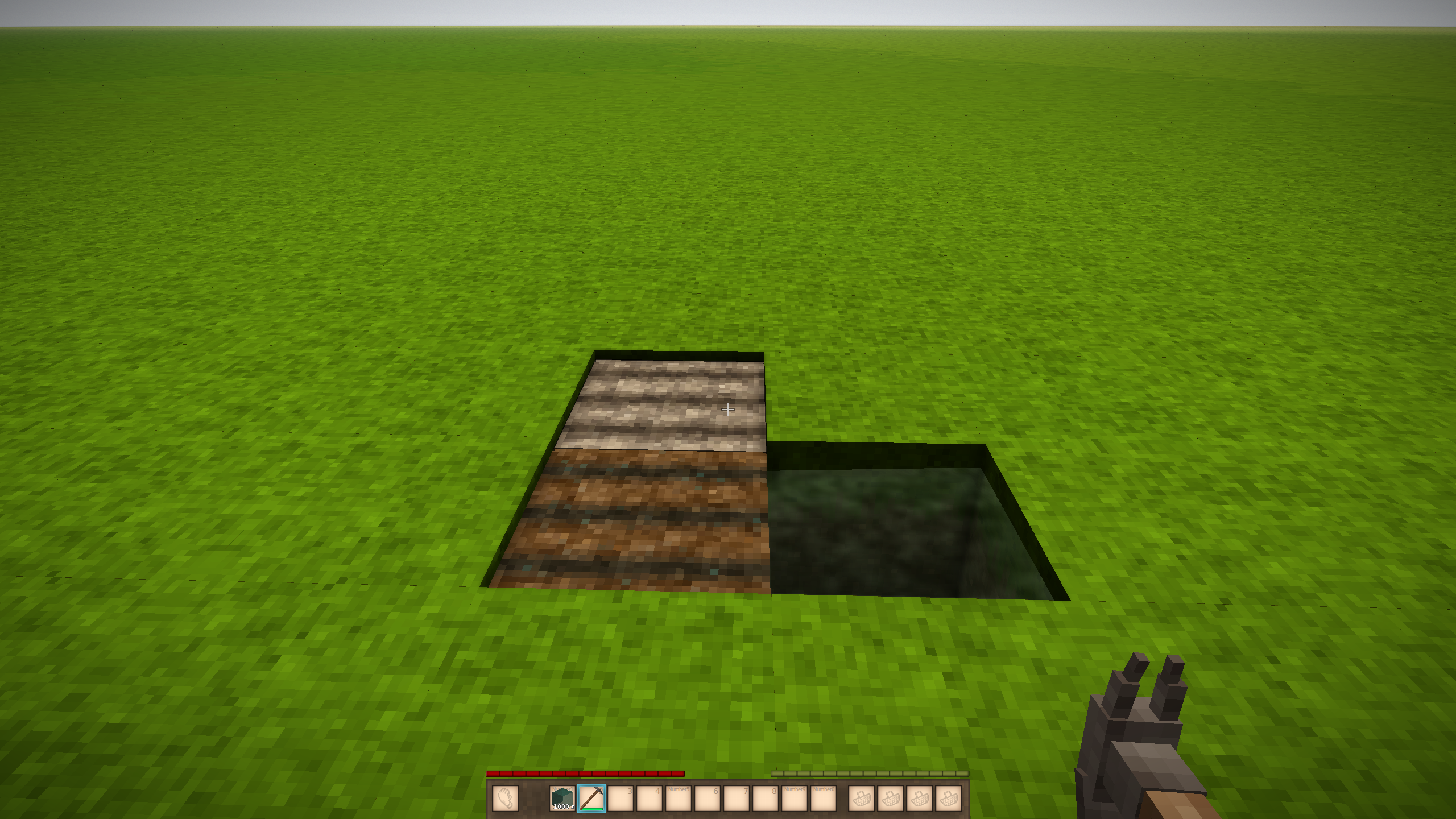
Crops do not grow below 10% moisture, whatever the tooltip still suggests. Around 50% the pace is already close to normal. At 100% each stage is shorter by about two in-game hours. With no source nearby, use a fired watering can or wait for rain.
Hover the farmland. “Nutrient Levels” lists N, P, and K. “Moisture” and “Growth speed” sit beside it.
How nutrients are spent
A crop spends one total off its nutrient across its whole life. Each new stage takes an equal share of that total. A nutrient cannot rise above 100%.
Empty farmland gains about 0.25% every 3–4 in-game hours, roughly 1.5–2% a day, and stops at the soil’s own ceiling. While a crop is planted, the nutrient it eats does not recover, and the other two recover at about a third of that speed. A ripe crop spends nothing more and stores nothing more. Below 10 °C recovery loses 10% per degree and stops at 0 °C. Growth stops at freezing as well: every degree down from 10 °C slows it by 10%.
Light below 19 costs 10% speed per level and stops growth at 9 or lower. Sunlight is 22. Several lights do not add together. A greenhouse adds 5 °C, and that is its own build.
Crop rotation
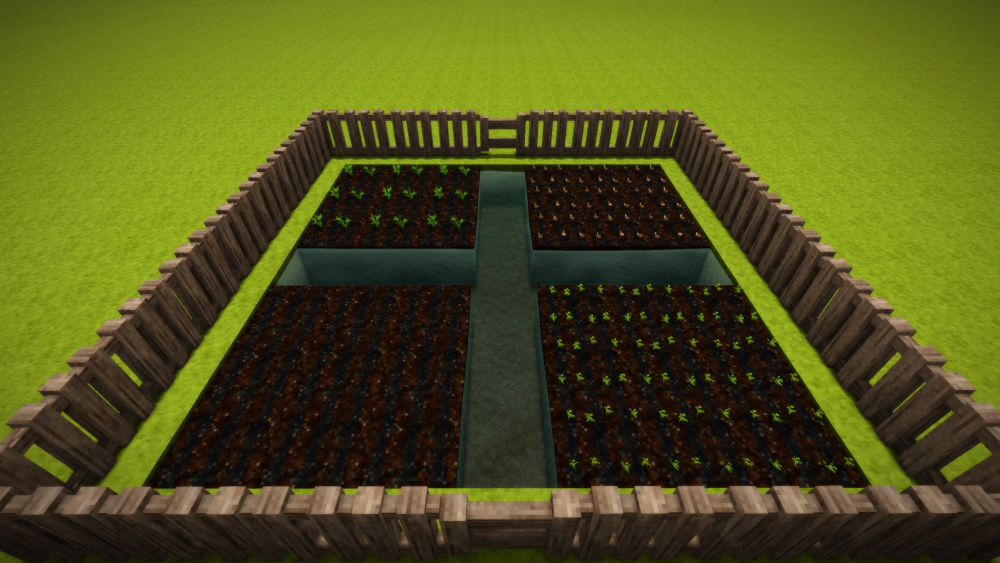
After a nitrogen crop the soil is low on N and still high on P and K. The next planting should eat a different nutrient. A practical layout is four equal parts: N, P, K, and one left empty. Empty ground recovers faster than planted ground. After the harvest, rotate the layout. The wait is set by the slowest crop in the set. For turnips, onions, and carrots, that is the carrot, at 1.03 months.
Fertilizer
Fertilizer goes on the farmland. It adds its own 0.25% on the same 3–4 hour tick whether or not a crop is planted and whichever nutrient that crop eats. Cold slows it the same way it slows natural recovery: while the air is too cold the store is not used, it simply waits. The tooltip calls this “Slow release Fertilizer”. The total on the block cannot pass 150%.
Fertilizer is the only way to push a nutrient above the soil’s natural ceiling, still capped at 100%. When the store runs out, the extra slowly falls back to that ceiling. Apply it when you plant. A crop started on already-depleted ground grows at the speed that ground has left.
| Item | N | P | K | Source |
|---|---|---|---|---|
| Potash | 0 | 0 | 60 | Grind sylvite in a quern. The Commodities trader also sells it. Once per block, it permanently raises the K ceiling by 15% |
| Saltpeter | 13 | 0 | 44 | Caves. A prospecting pick will not report it. The same Commodities trader |
| Bonemeal | 3 | 30 | 0 | Grind bones |
| Compost | 40 | 8 | 8 | 64 rot in a sealed barrel for 20 days. The Agriculture trader also sells it |
Potash changes how the farmland looks, stepping it to the next soil. On high fertility soil the K ceiling becomes 80 and the block looks like terra preta, while N and P stay at 65. On terra preta itself the K ceiling becomes 95, and a second dose does not raise it again.
Terra preta
Rot left by spoiled food becomes compost in a barrel: 64 rot, press Seal, 480 in-game hours, 16 compost out.
Food preservation in Vintage Story
The crafting grid comes next. Sixteen compost, eight bonemeal, and eight powdered charcoal make one terra preta block. The same sixteen, eight, and eight plus one high fertility soil block make two. Charcoal is ground in a quern.
Crops
Break a ripe plant with an empty hand, a knife, or a scythe. A scythe takes up to six neighboring plants in one swing. The harvest line reads “Break to harvest”. A ripe crop drops about 1.2 seeds on average. An unripe one drops about 0.7. For many vegetables the stage before the last one almost always returns a seed and already gives a small amount of food.
The months below come from the crop files. Days assume a 9-day month. A longer month stretches the days by the same ratio. A dash means that crop file does not set a damage threshold. Growth still stops at 0 °C.
Carrot, parsnip, rye, fennel, and licorice state it in the file: damage while the plant is still growing leaves 75% of the harvest, and cold hitting an already ripe plant leaves 50%.
| Crop | Nutrient | Total used | Months | Days | Cold | Heat | Ripe yield |
|---|---|---|---|---|---|---|---|
| Carrot | K | 34.3 | 1.03 | 9.3 | −10 °C | 32 °C | 9–13 |
| Flax | K | 44.4 | 1.78 | 16.0 | — | — | grain 2.5–3.5, flax fibers 3.5–4.5 |
| Onion | P | 30 | 1.54 | 13.9 | −1 °C | — | 10–14 |
| Spelt | N | 35 | 1.78 | 16.0 | — | — | grain 5–7 |
| Turnip | N | 24 | 0.80 | 7.2 | — | 27 °C | 6–8 |
| Parsnip | P | 17.5 | 1.75 | 15.8 | −10 °C | 32 °C | 10–14 |
| Rice | K | 45 | 2.00 | 18.0 | 8 °C | 46 °C | grain 5.5–7.5 |
| Rye | N | 35 | 1.78 | 16.0 | −12 °C | 27 °C | grain 4.5–6.5 |
| Soybean | K | 32 | 1.14 | 10.3 | — | — | 5–7 |
| Amaranth | N | 13.3 | 1.78 | 16.0 | 6 °C | 42 °C | grain 2.5–3.5 |
| Cassava | K | 22.2 | 4.40 | 39.6 | 4 °C | 44 °C | 14–18 |
| Peanut | P | 40 | 2.20 | 19.8 | 10 °C | 42 °C | 8–12 |
| Pineapple | N | 14 | 5.60 | 50.4 | 6 °C | 48 °C | 1 |
| Sunflower | N | 36 | 1.70 | 15.3 | — | — | grain 5.5–7.5 |
| Pumpkin | P | 30 | 1.70 | 15.3 | — | — | fruit grows on the vines, not on the mother plant |
| Cabbage | N | 36.7 | 1.38 | 12.4 | — | 35 °C | 2 |
| Fennel | N | 35 | 2.67 | 24.0 | −8 °C | 35 °C | 9–13 |
| Licorice | P | 35 | 2.67 | 24.0 | −8 °C | 35 °C | root 9–13 |
A pumpkin is a mother plant on a single farmland block. From stage 3 it sends vines across neighboring soil, and the ripe fruit is its own block. One ripe pumpkin fruit in the crafting grid returns one pumpkin seed. Raw cassava off the plant is not food yet.
Spelt, rye, rice, and the other grains can be fed to animals.
Animal Husbandry: Efficient Breeding
Finding seeds
Wild patches are scattered through the world. The temperatures below are the yearly average, not the reading on the character screen. A wild plant keeps growing in an unloaded chunk and ignores the current cold, but a ripe plant that is not picked resets to its first stage. It drops the same seeds as a farm crop and less food. On a long trip, pick wild crops as you pass them.
| Seeds | Yearly average temperature | Plants in the patch |
|---|---|---|
| Carrot | 5–24 °C | 0–10 |
| Flax | 3–31 °C | 0–26.6 |
| Onion | 3–29 °C | 0–10 |
| Spelt | 3–26 °C | 0–26.6 |
| Turnip | 1–26 °C | 0–10 |
| Parsnip | 1–22 °C | 0–10 |
| Rye | −10–14 °C | 0–26.6 |
| Rice | 22–40 °C | 0–26.6 |
| Soybean | 20–40 °C | 0–10 |
| Amaranth | 17–42 °C | 8–24 |
| Cassava | 23–48 °C | 1–7 |
| Peanut | 25–40 °C | 0–10 |
| Pineapple | 26–45 °C | 0–8 |
| Sunflower | 15–36 °C | 0–26.6 |
| Fennel | −10–18 °C | 2–8 |
| Licorice | 18–36 °C | 2–8 |
Cabbage and pumpkin have no wild patches. Cabbage, pumpkin, rice, and soybean seeds are in cracked vessels, including “Cracked vessel (Seed)” and “Cracked vessel (Farming)”. The Agriculture trader sells compost and seeds for cabbage, parsnip, and flax. In a cold region, rice and soybean are easier to carry home from ruins than to wait for a wild patch.
Hares
Brown hares, jackrabbits, scrub hares, and the other hares eat a planted crop and leave a dead plant: one seed and no food. The crop files mark cabbage, carrot, fennel, flax, licorice, parsnip, rye, soybean, spelt, and turnip for this. Onion, pineapple, pumpkin, amaranth, cassava, peanut, rice, and sunflower are not marked. Hares ignore wild crops. They spawn on grass, so an enclosed field should contain no grass blocks. Grass on empty farmland is not a spawn spot, because tilled soil is not a full block.
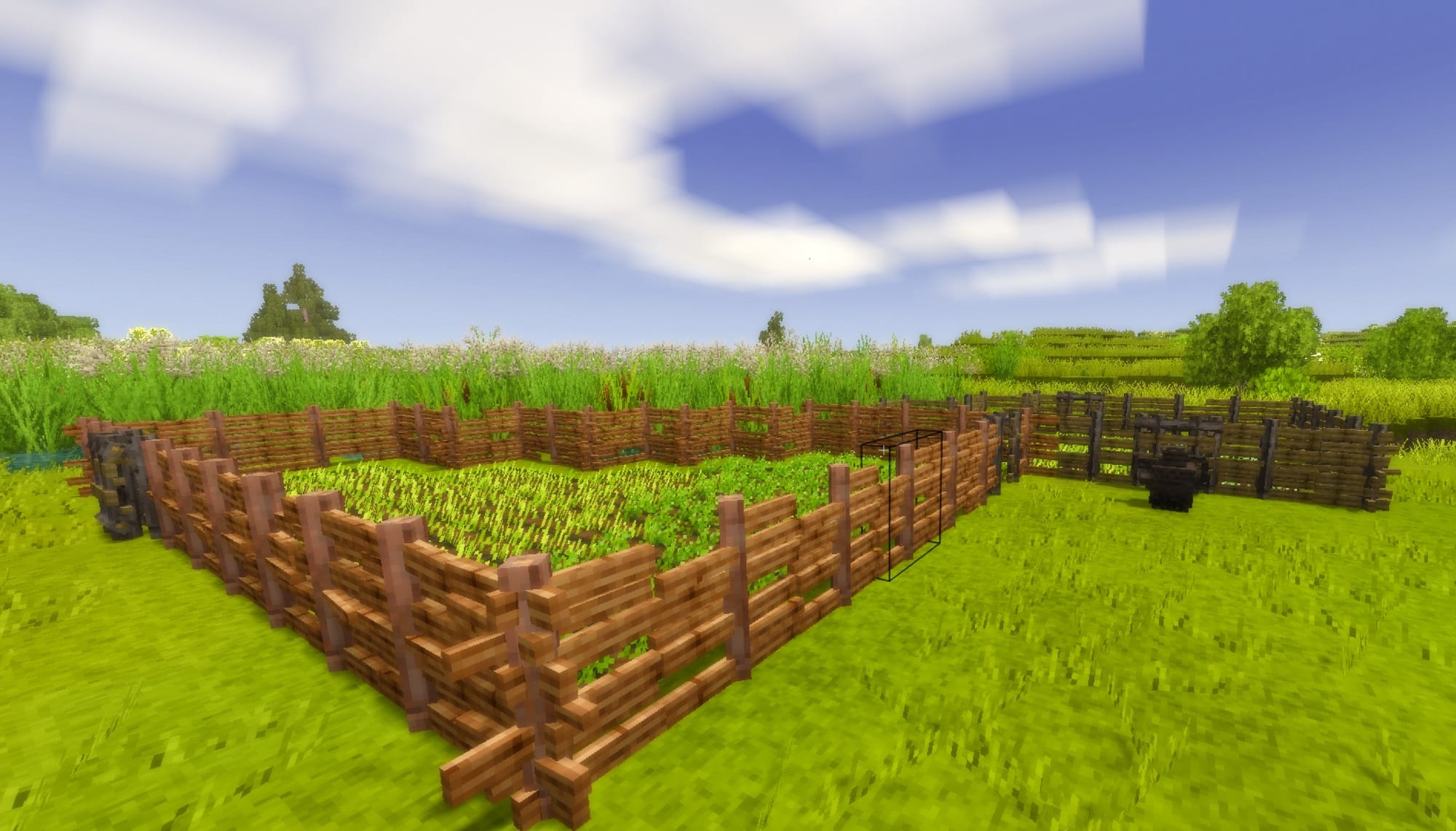
Walls, a fence, or a two-block dry moat will do. An adult hare can jump a one-block fence if that fence is standing in water and the water later freezes.
A scythe, if you do not have one yet, is smithing work.
The forge and anvil in Vintage Story
The mechanic follows the Farming wiki page.