


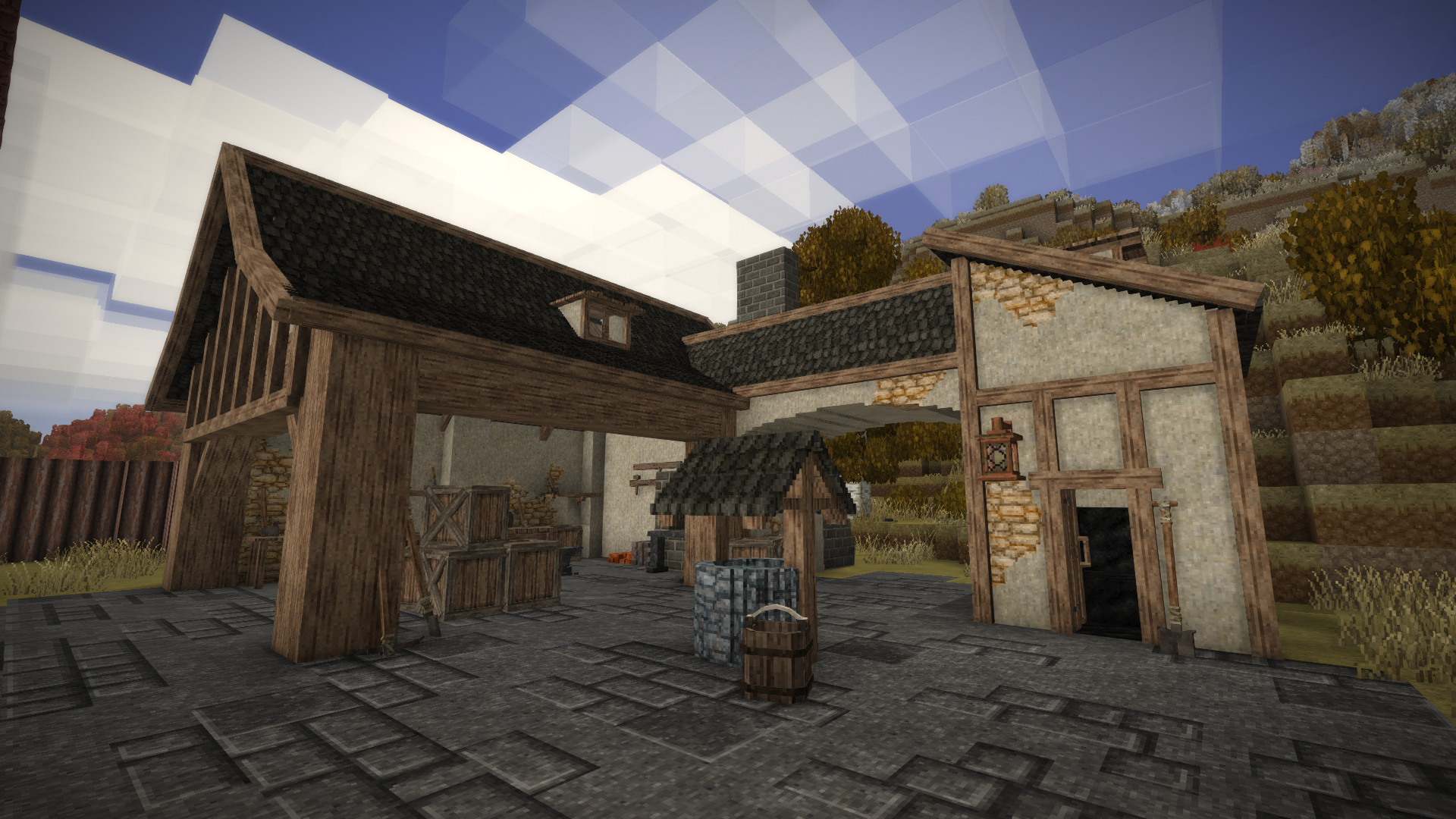
Casting covers the pickaxe, axe, hammer, and shovel. A saw, shears, spear, chisel, scythe, knife, nails, and plates do not come out of a mold. Those start as an ingot, get heated in a forge, and are hammered into shape on an anvil. Until you have a copper anvil, there is nothing to smith on.
What you need before the first piece
- an anvil — copper and bronze anvils are cast, not smithed;
- a hammer, tongs in the off-hand, and at least one ingot;
- a forge made from 7 cobblestone of any rock;
- fuel. Early on, that is charcoal.
Copper ingots are cast in a crucible before they can be smithed. Nuggets, molds, the charcoal pit, and pouring are covered in the guide on casting copper.
The hammer can be stone. Hammer tier does not decide which metal the anvil will take. Only the anvil’s own metal does.
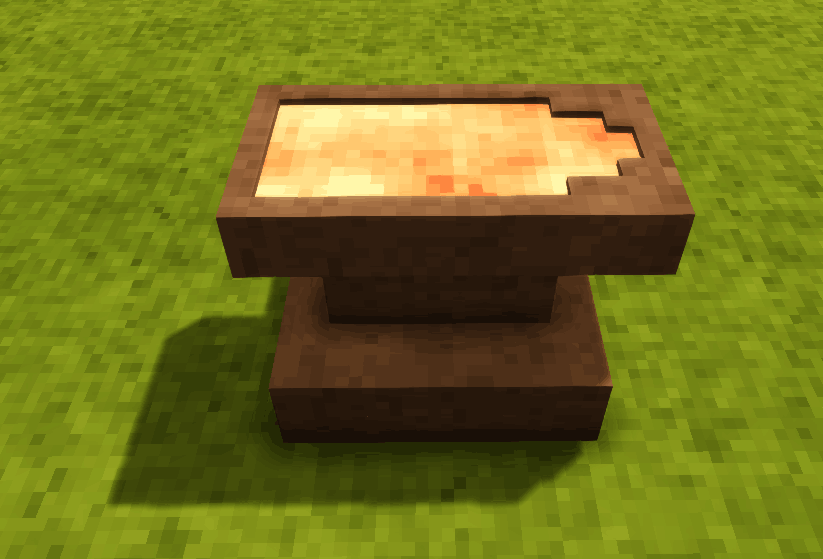
The copper anvil
The anvil mold is formed from clay and takes 28 clay. Fire it in a pit kiln, the same way as a crucible. The pour is 900 units of metal: 9 ingots, or 180 nuggets. A crucible can hold that much, but the mold has to be filled in one go. A partly filled mold cannot be picked up, and breaking it destroys the metal inside.
When the copper has cooled to cold, break the mold and take the anvil. It does not come out with a right click the way a pickaxe head does.
A copper anvil smiths copper, every bronze, gold, silver, lead, zinc, bismuth, and alloys such as brass. It will not touch iron. Iron needs a bronze anvil. If you later break the anvil down with a chisel in the crafting grid, you get 8 ingots back, not 9. The chisel loses 600 durability.
A bronze anvil is cast the same way, from the alloy. How much copper and rare metal to load is what the alloy calculator is for.
The forge and its fuel
The forge is crafted from 7 cobblestone. Fuel and ingots go in with Shift and right click. It holds 5 fuel and up to 4 ingots. Light it the same way, Shift and right click, with a torch in hand. Rain puts the forge out. Metal inside does not melt, even above its melting point. The forge only heats the piece.
Without bellows, fuel reaches about 60% of its temperature. That is enough for copper and bronze. Iron on charcoal is barely hot enough, and blister steel needs bellows.
| Fuel | Without bellows | With bellows | Burn time |
|---|---|---|---|
| Brown coal | 600 °C | 985 °C | 2.4 in-game hours |
| Black coal | 700 °C | 1150 °C | 3 in-game hours |
| Anthracite | 700 °C | 1150 °C | 4 in-game hours |
| Charcoal | 750 °C | 1232 °C | 2 in-game hours |
| Coke | 800 °C | 1314 °C | 2 in-game hours |
A metal can be worked once it is hotter than half its melting point. For copper that is 542 °C, for bismuth bronze 425 °C, for tin bronze 475 °C, and for black bronze 510 °C. Charcoal without bellows sits at 750 °C, so the first copper and bronze pieces do not depend on bellows. One piece of fuel is enough for one or two items.
Crude bellows are 8 sticks, 1 large or huge pelt, and 2 rope. Place them against the forge, facing it. They break after 500 presses. The ordinary bellows, 3 nails and strips, 6 leather, and 6 boards, do not break, but leather and nails come after this first bit of smithing.
How much firewood the forge’s charcoal will take is what the charcoal calculator adds up.
How to smith
- Put charcoal and an ingot in the forge and light it.
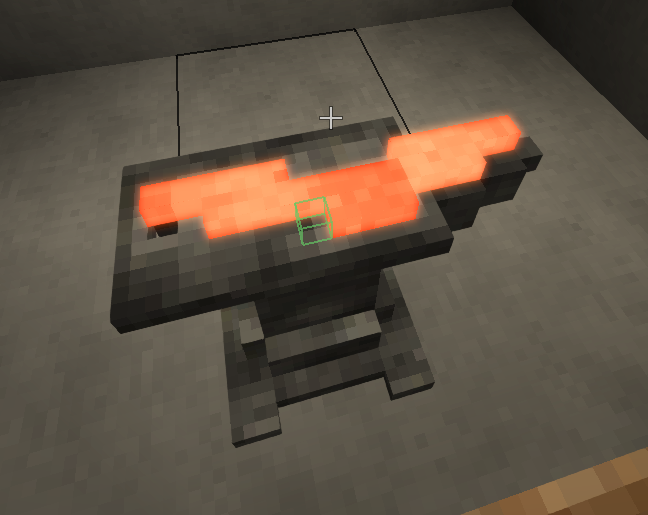
- Wait for a workable temperature. The block info overlay shows it.
- Pick the ingot up with tongs and place it on the anvil with Shift and right click.
- Choose the item in the dialog. Until you confirm, canceling gives the whole ingot back. After you confirm, it is a work item, and you cannot switch it to a different recipe.
- Green and purple cells appear on the metal. Fill the green ones and clear the purple ones. An ingot is 42 cells. A plate is 81.
- Hit it with the hammer. Right click without Shift turns the piece. If the metal cools, put it back in the forge. The shape you already made stays.
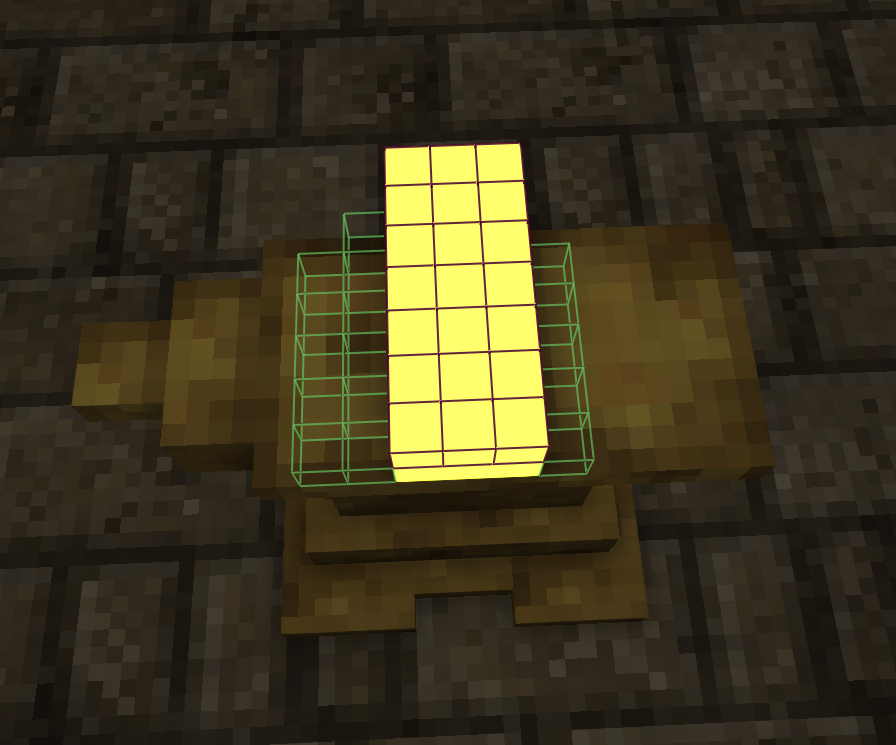
Hammer modes open with F. Hold Alt, or open the inventory, if the cursor needs to move freely.
- Heavy hit. On upper layers it spreads the metal, and near an edge it flattens voxels down. On the bottom layer it does nothing.
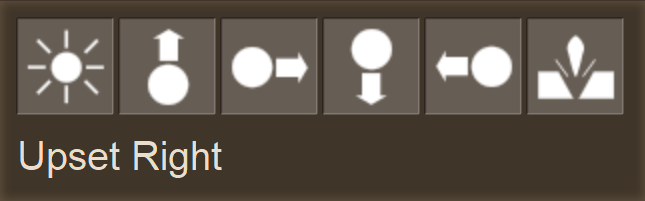
- Upset (up, down, left, right). Moves metal in the chosen direction. Voxels only leave the bottom layer from the edge of the piece.
- Split. Permanently removes one cell. On an iron bloom or blister steel it clears dark slag in a 3×3 square and leaves the metal alone.
If split lands in the wrong place, you do not need a second ingot. Cool the work item and put it in the crafting grid with a chisel. You get 20 bits back, the same as a full ingot. Copper and bronze bits go back into the crucible. An iron work item will not. That one has to go through the bloomery again.
A plate, a chain, and a helve hammer head need two ingots. Place the second hot ingot on the work item the same way as the first. Anything stacked above 6 cells is wasted, so spread the top down before you add more. A saw, shears, and a spear are one ingot each.
What to smith first
Cast the pickaxe and the hammer. Save the anvil for the pieces that have no mold.
| Item | Ingots | Why it matters now |
|---|---|---|
| Saw | 1 | buckets, barrels, a door, and real woodworking |
| Shears | 1 | shearing animals and bushes |
| Spear head | 1 | reach in a fight |
| Chisel | 1 | recycle a work item, and cut microblocks |
| Scythe | 1 | harvesting crops |
| Knife | 1 | pelts, reeds, and meat |
| Nails and strips | 1 | a chest, a trunk, and ordinary bellows |
| Plate | 2 | armor, and an easier blank for later smithing |
| Chain | 2 | chain armor and hanging mechanisms |
| Arrowheads | 1 | a bundle of arrows; a plate is the easier shape |
The saw is almost always first. Without it there are no buckets or barrels, and without barrels there is no proper leather. Nails come right after that if you want the bellows that do not break.
Which anvil works which metal
| Anvil | What it can smith |
|---|---|
| Copper | copper, every bronze, gold, silver, lead, zinc, bismuth, and their alloys |
| Tin, bismuth, or black bronze | the same, plus iron and nickel |
| Iron or meteoric iron | the same, plus meteoric iron, blister steel, steel, and pure tin |
| Steel | the same set as an iron anvil |
Meteoric iron will not sit on a bronze anvil, even though it sits next to ordinary iron in the tier list. Pure tin also waits for an iron anvil. For bronze, tin is melted in the crucible. It does not need to be smithed.
Iron and steel anvils are not cast. Each one is an anvil base and an anvil top, 5 ingots per half, then both halves are heated to at least 800 °C, powdered borax goes between them, and 12 hammer hits weld them. That is the next metal, not the first forge.
Iron and steel tools can be quenched after smithing. How that works, and what it can break, is covered in the guide on quenching and tempering.
Source: Smithing, Anvil, Forge, and Bellows on the Vintage Story Wiki (CC BY-NC-SA).