


In Vintage Story there is a cyan gear above the hotbar. It sits between the health bar and the hunger bar. It shows whether the place where you are standing is calm. When the color drains and the gear turns counter-clockwise, your stability is falling. That happens deep underground, near a rift, and during a storm.
The gear above the hotbar
The ground has its own number, and you have yours. At one hundred percent the gear hardly turns. Above one hundred it turns clockwise, and your stability rises. Below one hundred it turns counter-clockwise, and yours falls. On the surface the ground is usually somewhere between eighty and one hundred and fifty percent. Underground the number is often lower, though calm spots in caves do happen.
In a very calm place, around one hundred and fifty percent, your stability comes back by about one percent every four seconds. In a very bad place it leaves by about one percent every seven or eight seconds.

While your stability stays above about two thirds, everything sounds ordinary. Once it is lower, and the place itself is uneasy, a worried background sound starts. Below a quarter, drifters, bowtorns and shivers come closer, including places where light would usually keep them away. Below about thirteen percent, damage comes every four seconds. Near that line it is small, and at zero it is 0.15. The picture starts to shake, fog covers the distance, and you are in the rust world.
How to get stability back
The simple way is to walk somewhere the gear turns clockwise again. On the surface that is the usual case. A killed enemy also gives a little back. A Surface Drifter, a Surface bowtorn and a Surface shiver give about one percent. Rare strong enemies give much more.
A Temporal gear restores stability at once. Put it in your left hand, take a knife in your main hand, and hold the right mouse button to the end, about two seconds. The knife takes two health, the gear disappears, and your stability rises by thirty percent. If you let go early, the health is already gone and the thirty percent does not arrive. At two health or less, the game says: “Cannot apply without dying”.
The same gear sets your home point. Hold it in your main hand and keep it on the block you want. If the world has this closed, the game says: “You are unable to use temporal gears to set respawn points in this world.”
How to Set Your Home Spawn Point in Vintage Story
Rifts
Temporal Rifts appear on the surface near you and disappear on their own after a while. That can take from a few hours to a couple of days. Standing right next to one drops your stability much faster than a cave does. At night, drifters, bowtorns and shivers come out of it. During the day they come out only if you stand very close. A rift hardly ever appears over water. Light you placed keeps one from opening on that block and two blocks above it. A torch by the house is enough for this.
The C key opens the character screen. There is a line, “Current Rift activity”. It decides how many rifts can appear nearby.
| Line | How many rifts |
|---|---|
| LineCalm | How many riftsnone appear |
| LineLow | How many riftsfew |
| LineMedium | How many riftsseveral |
| LineHigh | How many riftsmany |
| LineVery high | How many riftsa great many |
| LineApocalyptic | How many riftsa huge number can appear |
For the first three days the line stays on Low. Very high can appear from day twenty, Apocalyptic from day thirty. When the world is created, Temporal Rifts is usually set to Visible. Invisible rifts still let drifters out, but the rift itself cannot be seen, makes no sound, and does not lower stability. Off removes both the rifts and the drifters on the surface.
The storm
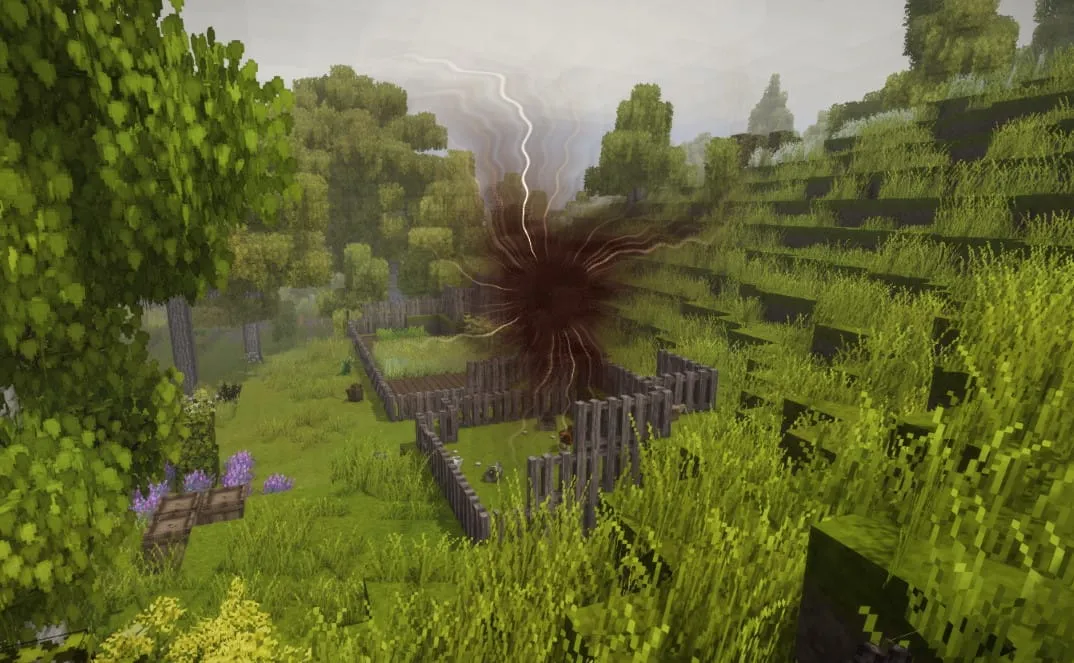
In an ordinary world, Temporal storms is set to “Approx. every 10-20 days, increase strength/frequency by +10% each time, capped at 100%”. The first storms are light. The older the world, the stronger they are, and they come a little more often. A storm lasts from a tenth of a day to a fifth. Light, medium and heavy last the same time, but a heavy one pulls stability down hard even on a calm field.
In a new world the chat tells you right away how many days remain until the first storm. The later messages are these. “A light temporal storm is approaching”, and the same for a medium or heavy one, comes about a third of a day ahead. “A light temporal storm is imminent” comes when about half an in-game hour is left. “The temporal storm seems to be waning” comes that same short time before the end.
While the storm lasts, even a calm place behaves like a bad one. Large rust-colored gears appear in the sky, and it is hard to see far. Drifters appear around you, indoors as well, if there is room for a body to stand. A Double-headed Drifter can be among them. Light does not stop them during this time.
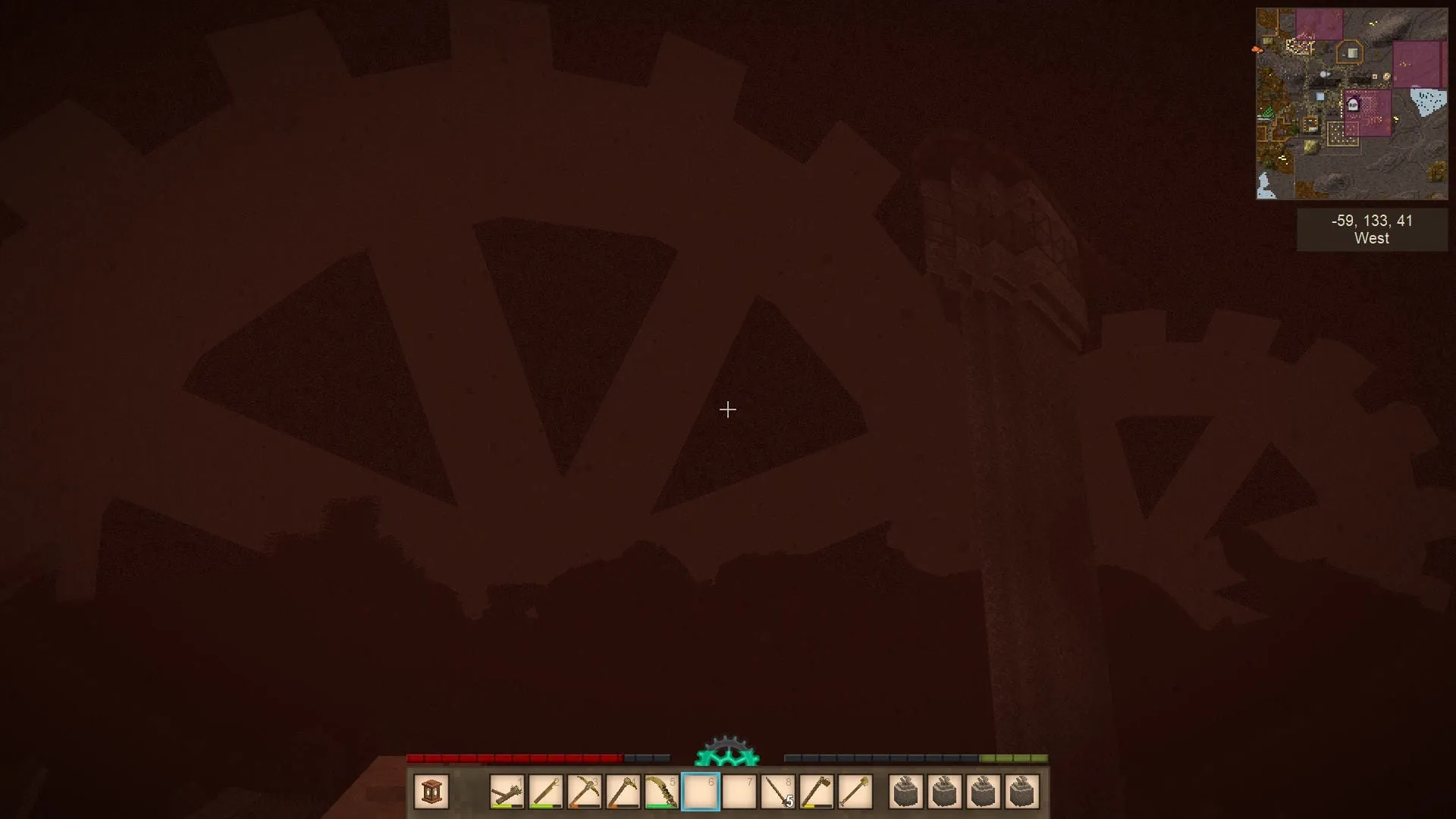
It is easier to wait out a storm in a small closed room, where a new enemy has nowhere to appear. Standing on a tall pillar is worse: a Surface bowtorn shoots from far away. In an ordinary world, Sleeping during temporal storms is set to Disallowed. If you lie down, the character thinks: “If I go to sleep now, I would no longer be able to wake up”. When the setting is Allowed, you can lie down after the “imminent” message.
Temporal stability is described from the wiki Temporal stability, the storms from the wiki Temporal storm, the rifts from the wiki Temporal rift.