


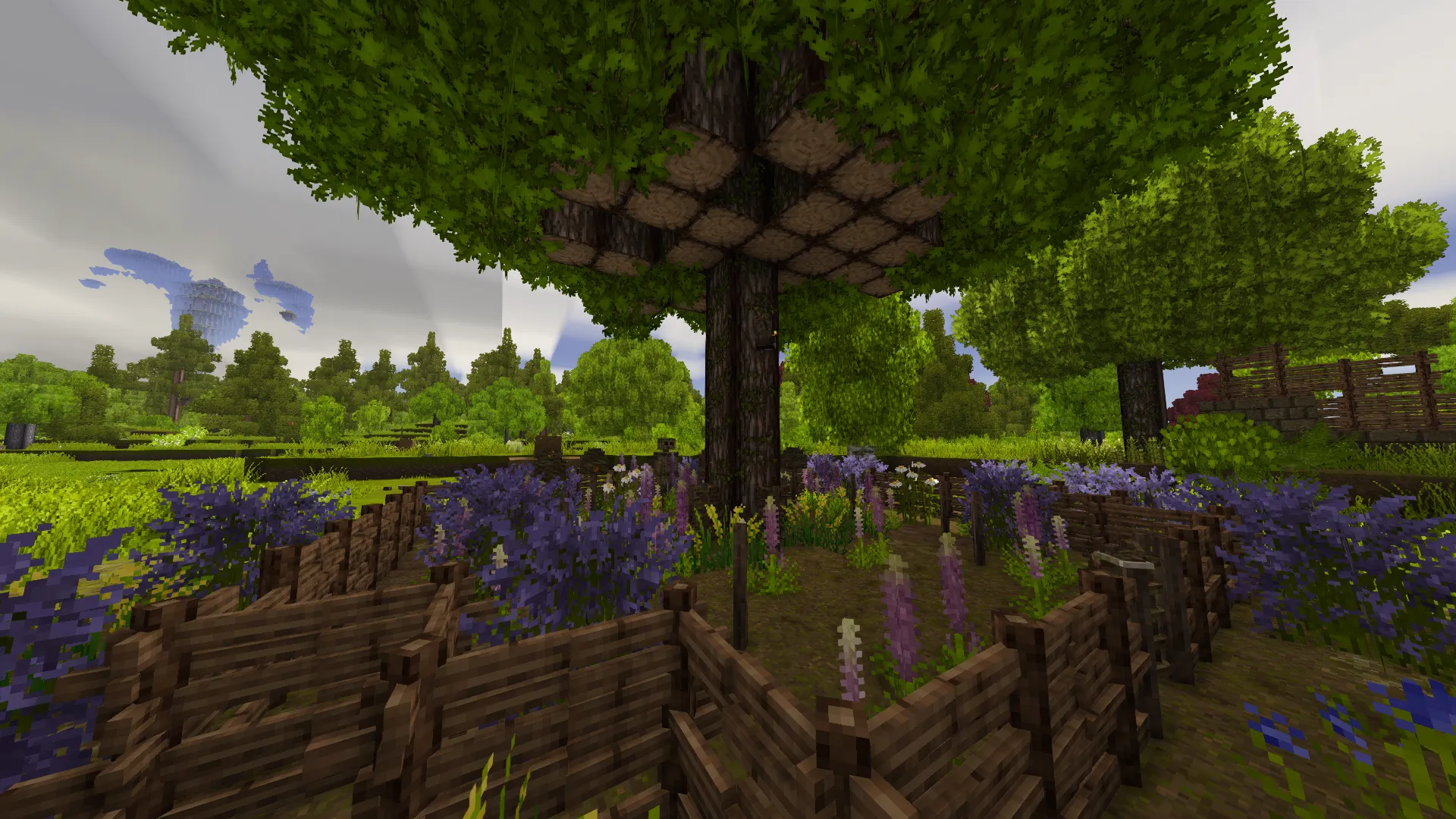
Bees in Vintage Story keep their own hours. They want a warm forest and flowers, and what they leave you is honey and wax: honey for food, wax to seal crocks for the winter and to pour into candles. A colony is easier to find by ear. The hum in the crown usually arrives before you can pick the hive out of the leaves.
Where to find them
Wild hives appear in forest where the year stays between 5 and 35 degrees, rainfall sits between 0.35 and 0.95, and the woods cover at least a quarter of the ground. On the character screen, the C key, those are the lines “Outside Temperature” and “Rainfall in this Area”. With admin rights, /wgen pos climate prints the exact numbers.
The hive hangs under the branches, or it sits inside the trunk. A medium one is a “Wild bee hive (Medium)”, a large one a “Wild bee hive (Large)”. The one inside a log is named for the tree, for example “Wild beehive in oak tree”. Leave that log alone. Breaking a wild hive always wakes an angry swarm, drops a little honeycomb, and the colony is gone. Left in peace, it will swarm into your skeps again and again.
Your own skep
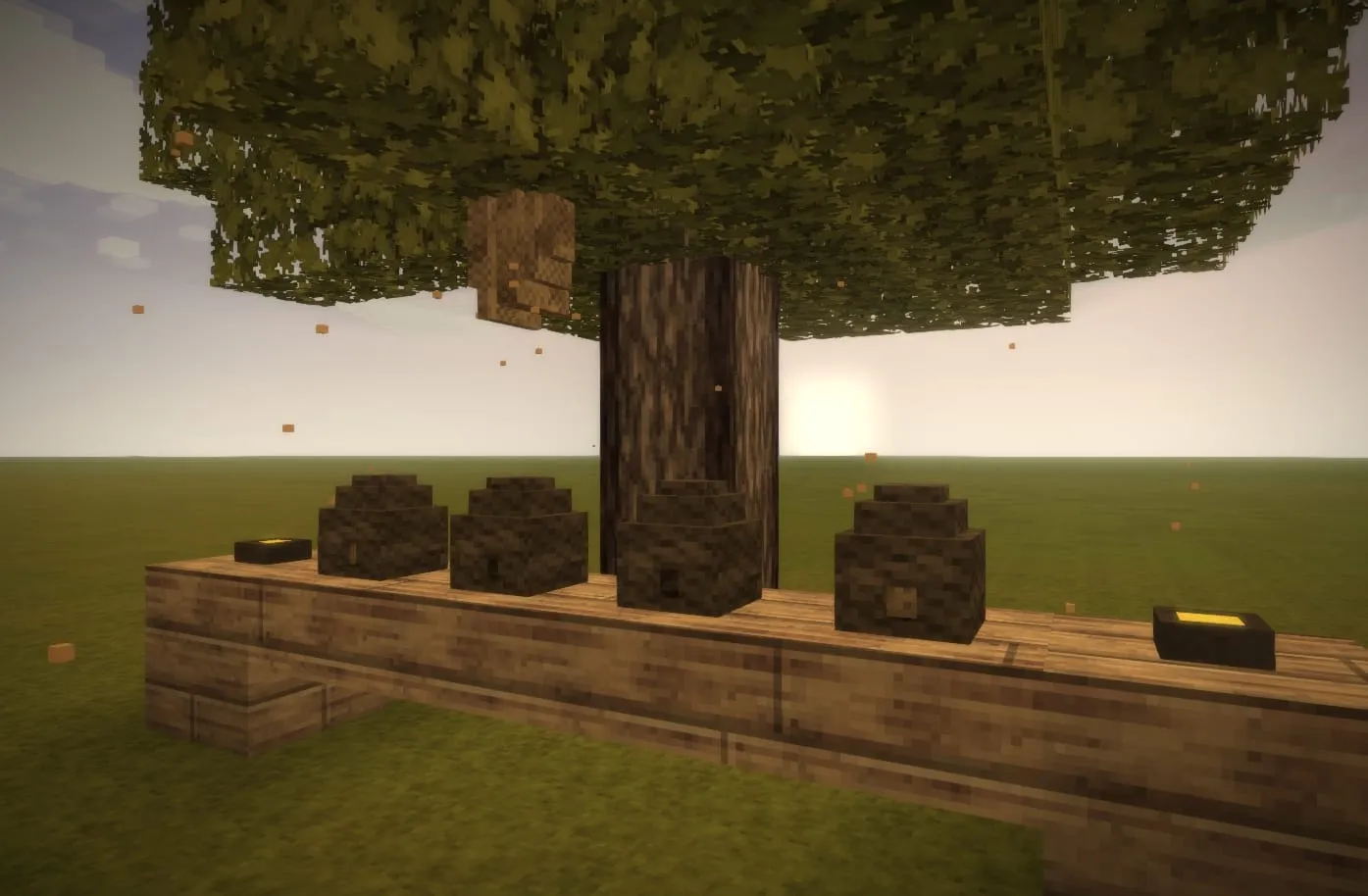
An empty skep is woven from sixteen Cattails and two pieces of clay. Any clay will do: Blue clay, Red clay, or Fire clay. Sixteen Papyrus works in place of the cattails. You get an “Empty reed skep” or an “Empty papyrus skep”. From there they behave the same.
Set the empty skep on solid ground beside the wild hive, under the same tree. The bees fill the nearest empty one. Once the swarm moves in, it becomes a “Populated reed skep” or a “Populated papyrus skep”.
Pick a populated skep up with the right mouse button. It only fits a free backpack slot, never the ordinary inventory. Choose that slot by holding sprint and scrolling, or with the slot keys. While you carry it, the bees stay quiet. Breaking a populated skep just to move it can wake the swarm.

Flowers and swarming
Look at a hive and it tells you what it can see. In English the line is “Nearby flowers”. Honeycomb will not ripen while the population is still poor. A lone hive needs four flowers before honeycomb can start, and seven before it will swarm. Every other living hive in the same area asks for three more flowers. The wild hive counts, and so does every skep that is already populated.
The bees do not search a neat circle. From the hive it is eight blocks north and eight west, seven south and seven east, four blocks up and seven down. A flower in a pot counts the same as a flower in the ground. Catmint, Forget me not, Wild daisy, Golden poppy, Cornflower, Lily of the valley, and lupine all count. Horsetail and Redtop grass do not. Flowering crops feed the hive too. Sprouts do not yet.
Farming in Vintage Story: farmland, moisture, and fertilizer
Seven flowers give a lone hive about ten days until it swarms. Each extra pair of flowers trims about a day. The line reads “Will swarm in approx. {0} days”, and at the end “Will swarm in approx. one day” or “Will swarm in less than a day”.
| Flowers at one hive | Until the swarm |
|---|---|
| 7 | about 10 days |
| 8 | about 9 days |
| 10 | about 8 days |
| 12 | about 7 days |
| 14 | about 6 days |
| 16 | about 5 days |
| 18 | about 4 days |
| 20 | about 3 days |
| 22 | about 2 days |
| 23–24 | about one day |
| 25 or more | less than a day |
If the flowers thin out too far, the bees forget the skep they had chosen and the count starts over. After a successful swarm that colony rests for about two days before it looks for another empty skep.
At home
At home, skeps sit comfortably in pairs, with a gap of a couple of blocks, and flowers in the spaces between. Each pair then has enough to eat, and the pattern can be repeated.
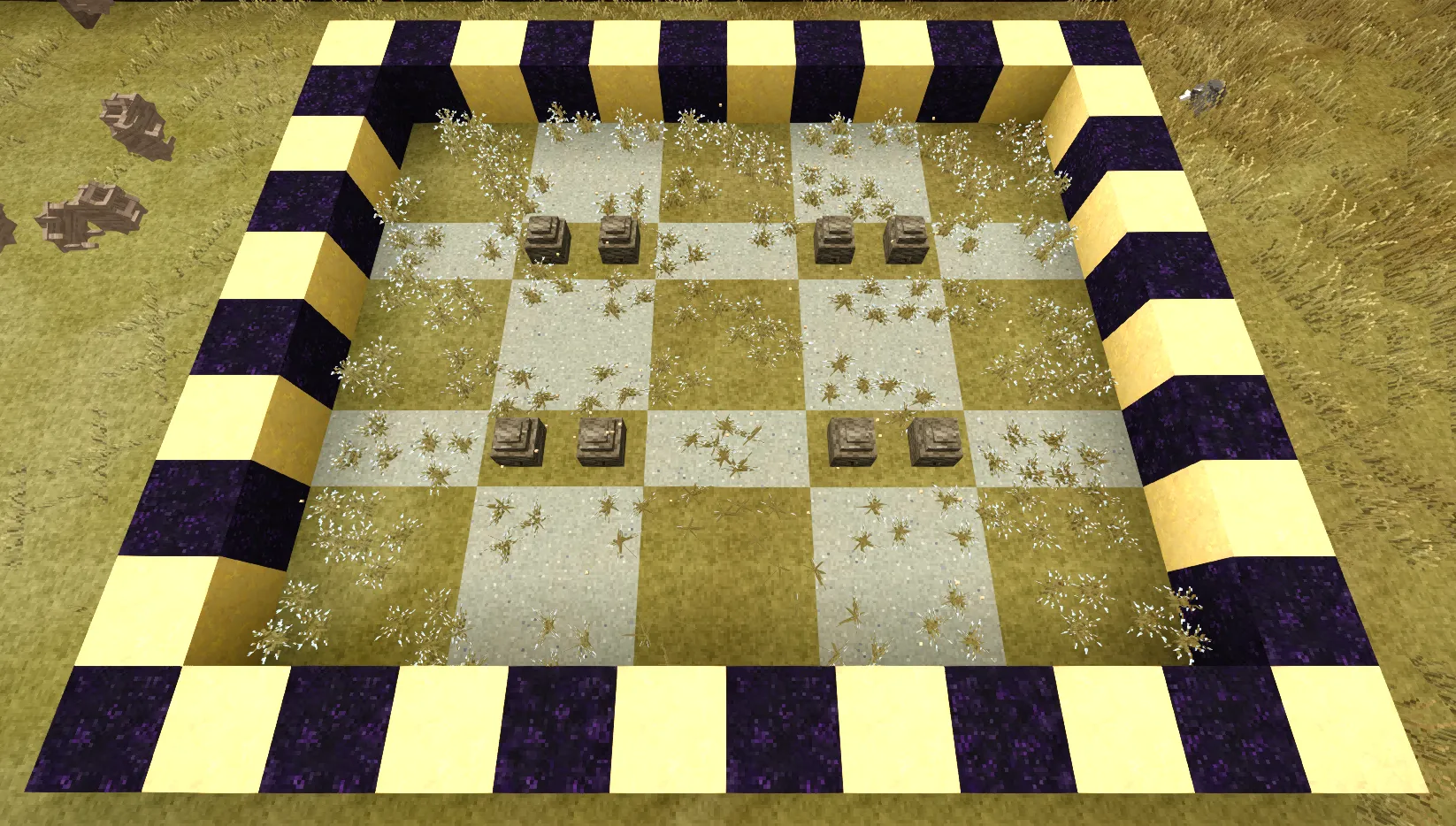
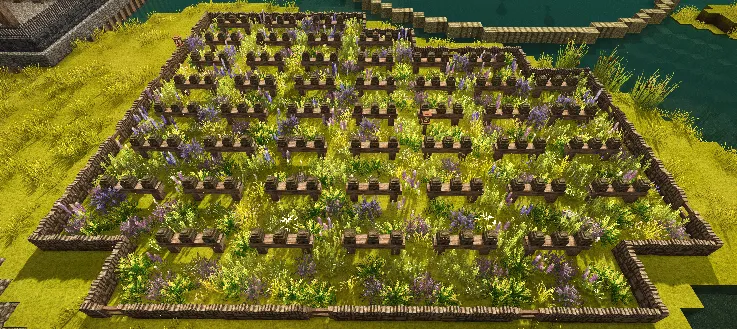
The same idea grows into a whole meadow: rows of skeps, a flower on almost every free block, and a fence around the edge. The fence earns its place. Once a skep is full of honey, a Raccoon may eat it. If a swarm does spill out, it stings anything alive nearby, including livestock, so the apiary is happier away from the pen.
Harvest
Honeycomb in a populated skep ripens in anywhere from a day and a half to five and a half. The wait is chosen at random on the day you place the skep. If flowers are scarce and the population is still poor, the honey waits even after those days have passed. A ready skep shows a bright yellow entrance, and the prompt says “Break to harvest”.
Breaking it yields three Honeycomb and a handful of whatever it was woven from, cattails or papyrus. That colony is finished. In about four breaks out of ten, an angry swarm comes with the honeycomb. It searches for anything alive out to about fifteen blocks, stings often and lightly, and disperses after about two minutes. A Straw dummy nearby gives it something else to chase. Step back yourself, then pick the honeycomb off the ground.
Cold
At zero and below, the bees go still. Swarming and honeycomb both wait for warmth. At −10 °C the honey wait starts over, and the colony also takes those two quiet days before the next swarm. A greenhouse keeps the hive five degrees warmer. The game treats a room as a greenhouse when it is closed and the glass roof outweighs the solid part. The tooltip then adds “+5°C from greenhouse”.
Honey and wax
Hold the honeycomb and squeeze it with the right mouse button over an empty container. The item says so itself: “Squeeze out over an open container to get honey and wax”. One honeycomb gives 0.2 liters of Honey and one Beeswax.
A fired bowl holds one liter, which is five honeycomb. A fired jug holds three liters, fifteen honeycomb. A Wooden bucket holds ten liters, fifty honeycomb. A Barrel holds fifty liters, two hundred and fifty honeycomb. Wax stacks to thirty-two, honeycomb to eight.
Honey is good on its own, and better in porridge and jam: in a finished meal it fills you more than a sip from the bowl. Wax seals a crock of food, and the stores last much longer.
Food preservation in Vintage Story
Three Beeswax and one Flax fibers, cooked in a fired pot, become one Candle.
Bees are described from the wiki Beekeeping.