


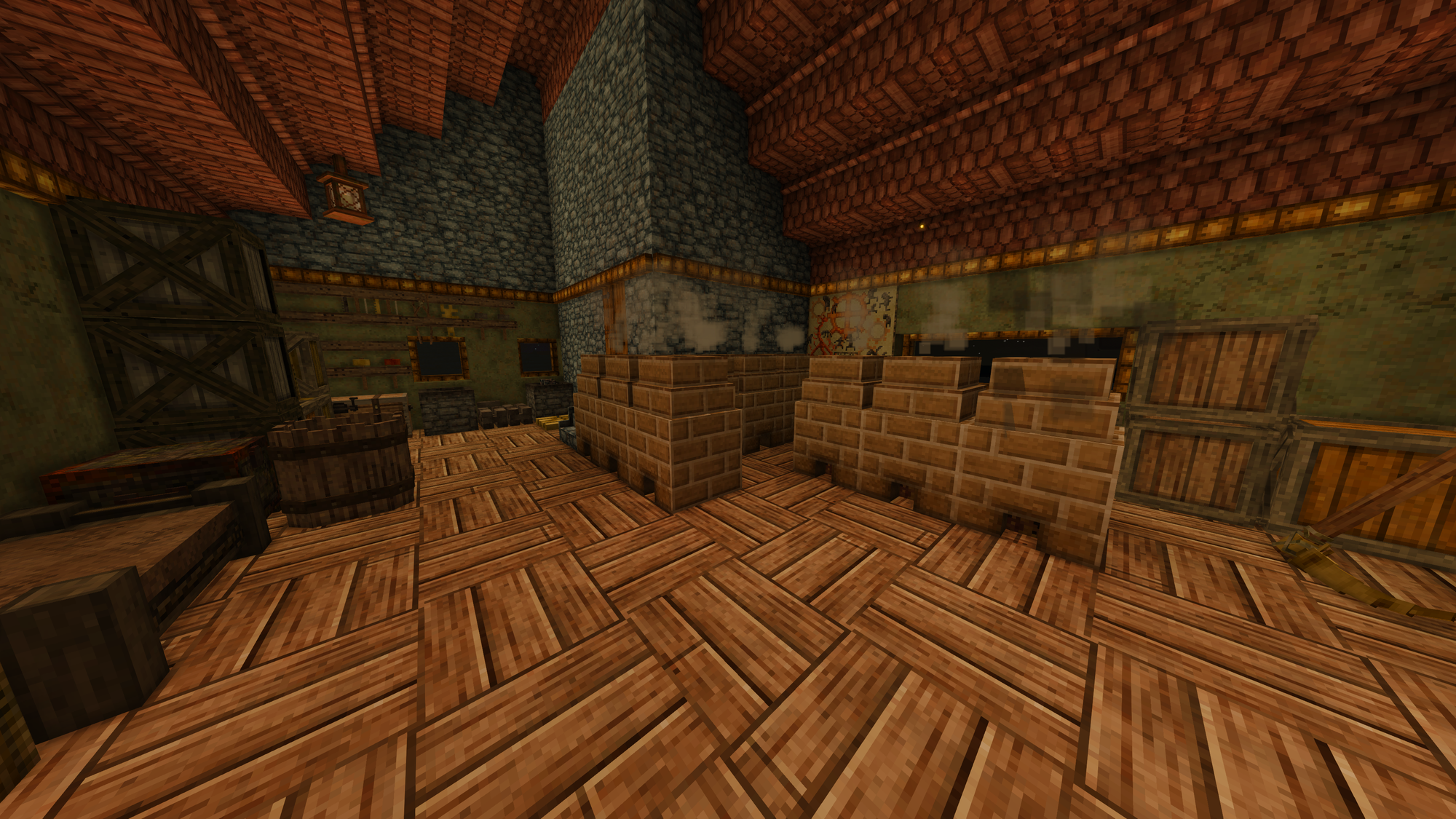
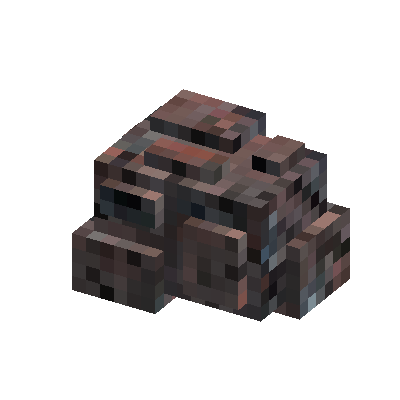
Iron melts at 1482 °C. A crucible never gets there: even coke in a firepit stops around 1340 °C. So the ore is not poured into a mold. It is fired in a bloomery, and what comes out is not an ingot. It is a bloom, a porous lump of metal still full of slag. The ingot is smithed out of that on an anvil.
The ore itself needs a bronze pickaxe. Which bronze is made from what is covered in the guide on the three bronzes.
Where the ore is
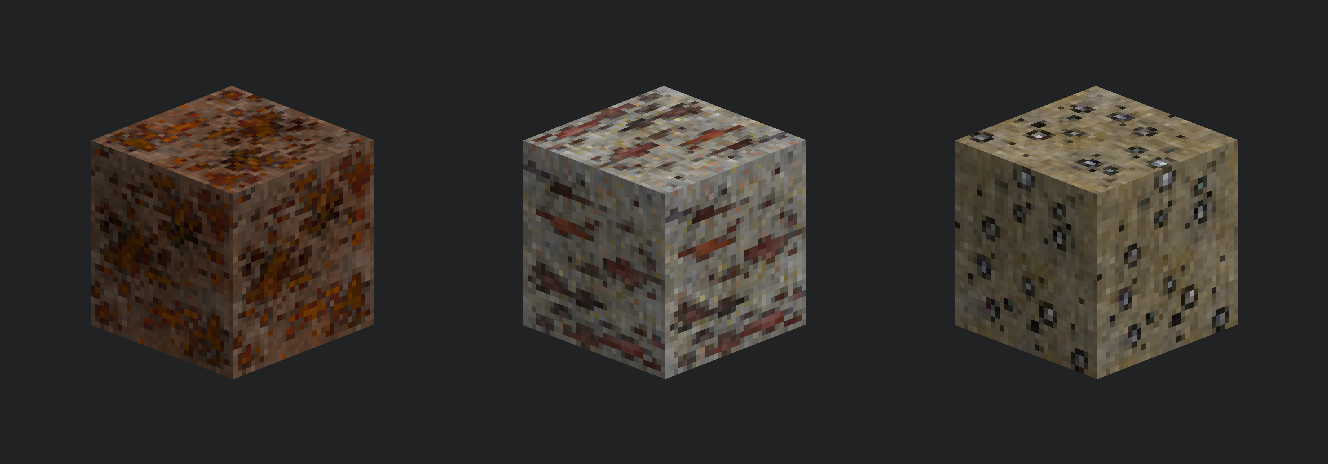
Iron does not leave bits on the surface. It is a deep ore: hematite, magnetite, and limonite. On a default-height world the discs sit from about Y=5 to Y=93. The lower you go, the better the chance of a richer chunk. Sandstone and bauxite never hold it. Every other rock can.
| Ore | Host rock | How often |
|---|---|---|
| Limonite | chert, shale, basalt | the most common of the three |
| Hematite | limestone, granite, peridotite, phyllite | rarer |
| Magnetite | andesite, chalk, conglomerate, claystone, slate | the rarest |
The vein is one block thick and wide: a disc with a radius of 16 to 36 blocks. Search those rocks with a prospecting pick. The handbook on H lists which stone holds which ore. Crush chunks with a hammer to get nuggets. Without a bronze pickaxe, or an ore blasting bomb, the block will not break.
Fire clay bricks
The bloomery is built only from fire clay bricks. Red and blue clay will not do. Fire clay is dug around bauxite sand and gravel, and under black coal and anthracite.
Four pieces of clay in the crafting grid make one raw brick. Fire it in a pit kiln, the same way as molds and a crucible. How to build that pit without burning the base is in the guide on the pit kiln.
The bloomery takes 12 fired bricks. The base is crafted from 8, the chimney from 4. Set the base on a solid block, then the chimney directly on the base.
How to fire it
Nuggets and fuel go into the base with right click. Ctrl and right click loads five at a time. Light it with a torch or a firestarter. After a few seconds the chimney smokes, and the hole in the base glows.
The fuel has to burn at 1200 °C or hotter. Firewood, peat, and brown coal are refused.
| Fuel | Bloomery |
|---|---|
| Charcoal | yes |
| Black coal | yes |
| Anthracite | yes |
| Coke | yes |
| Brown coal, peat, firewood | no |
How much firewood that charcoal will take is what the charcoal calculator adds up.
The bloomery counts in batches of 20 nuggets. Anything left over is not processed: 50 nuggets make 2 blooms and hand 10 nuggets back. One firing holds 6 fuel, which is 6 blooms and 120 nuggets. If there is not enough fuel for the ore already inside, it will not light. The other way is not checked. A short stack of nuggets will still light, and the fuel is wasted.
| Ore nuggets | Fuel | Output |
|---|---|---|
| 20 | 1 | 1 bloom |
| 120 | 6 | 6 blooms, the limit of one firing |
Hematite, magnetite, and limonite can share a load. To the bloomery they are all iron nuggets. Do not add a different metal to the same firing. This block does not make alloys.
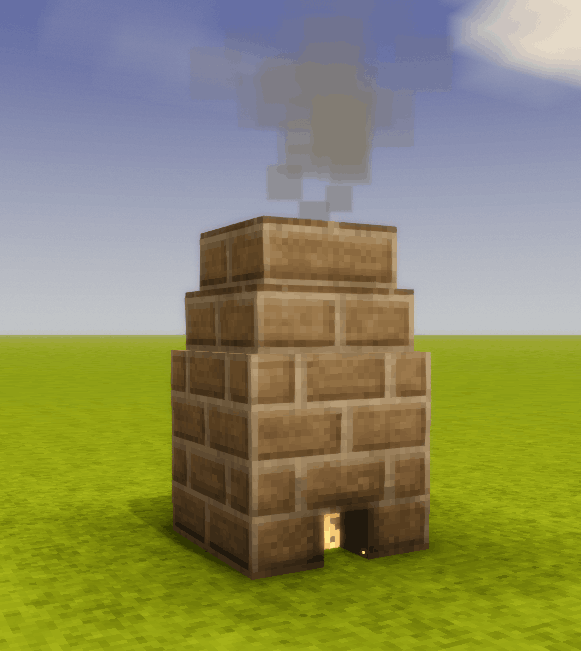
The firing takes 10 in-game hours. Aim at the base and the block info shows what is inside. When that line says iron blooms, break the bloomery by hand. No tool is required. Right after the firing the contents are still about 900 °C and cool over the next hour, so keep tongs in the off-hand.
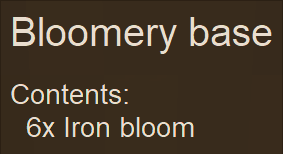
A broken bloomery does not drop the blocks whole. It drops bricks: 6 to 12, 9 on average. Each firing costs about 3 bricks. Rebuild from what came back and add the ones you are short.
From bloom to ingot
A bloom is not a tool yet. Heat it in a forge above 700 °C and place it on an anvil. Copper is not enough. You need bronze or better. The dark cells are slag. The hammer’s Split mode clears them in a 3×3 square and leaves the metal alone if you hit the slag. Then smith what remains into an ingot. Since 1.22 a bloom is guaranteed to hold enough metal for one ingot.
How to heat the forge, turn the work item, and change hammer modes is covered in the guide on the forge and anvil.
Iron bits from a chiseled item come back as an ingot, not a bloom: 20 bits and 1 fuel. Only ore nuggets go through a bloom. An iron work item will not go back into a crucible.
A finished ingot can be worked from 741 °C. On charcoal without bellows that is barely hot enough, so a long piece has to go back in the forge. Once you are making a lot of tools, blooms can be handed to a helve hammer. Finished iron tools can also be quenched.
How to quench iron, and what it can break, is in the guide on quenching and tempering.
Source: Bloomery and Iron on the Vintage Story Wiki (CC BY-NC-SA).